

Philippines
Head -Office of Career Services
- August 2026 Philippines Report
- June 2026 Philippines Report
- February 2026
- November 2025 Philippines Report
- February 2024 Philippines Report
- April 2023 Philippines Report
- November 2022 Philippines Report
- May 2022 Philippines Report
- February 2022 Philippines Report
- November 2021 Philippines Report
- August 2021 Philippines Report
- May 2021 Philippines Report
- February 2021 Philippines Report
- October 2020 Philippines Country Report
- July 2020 Country report
- Singapore’s E2I Learning Visit to Manila
- Intentional and Dedicated Career Placement Practice: APPCU is Paving the Way
- Journey to Meaningful and Purposeful Careers in the Philippines
- Philippine Economic Growth through Overseas Migration & Remittances: A look at an immigrant labor force from the home country perspective
- Report on Career Development in the Philippines
- The Philippines — a Haven of Festivals
- Ateneans At The Vanguard Of Nation-Building
- Career Development in the Philippines: A Rough Sketch of June 2014 to February 2015
1. Labor Market Survey
| Philippines | Labor Force Participation Rate (%) | Employment Rate (%) | Underemployment Rate (%) | Unemployment Rate (%) |
|---|---|---|---|---|
| 2026p | 63.5 | 95.0 | 12.8 | 5.0 |
| January | 62.3 | 94.2 | 13.2 | 5.8 |
| February | 63.8 | 94.9 | 11.8 | 5.1 |
| March | 63.3 | 95.0 | 12.3 | 5.0 |
| April | 62.7 | 95.3 | 15.2 | 4.7 |
| May | 63.8 | 95.2 | 12.2 | 4.8 |
| June | 65.1 | 95.1 | 12.2 | 4.9 |
Labor Force Participation
Persons in the labor force consist of those aged 15 years and over who are either employed or unemployed. In June 2026, the labor force participation rate (LFPR) was recorded at 65.1 percent, lower than the 65.7 percent registered in June 2025 but higher than the 63.8 percent observed in May 2026. The June 2026 LFPR translates to a total of 53.25 million Filipinos aged 15 years and over who were in the labor force. In comparison, the labor force population stood at 52.42 million in June 2025 and 52.13 million in May 2026.
Unemployment
The unemployment rate in June 2026 slightly increased to 4.9 percent from 4.8 percent in the previous month. Furthermore, it remained higher than the 3.7 percent recorded in June 2025. In terms of magnitude, the number of unemployed persons was estimated at 2.59 million in June 2026, higher than the 2.50 million recorded in May 2026 and the 1.95 million posted in June 2025.
Employment
The employment rate in June 2026 was recorded at 95.1 percent, lower than the June 2025 employment rate of 96.3 percent. In May 2026, the employment rate was posted at 95.2 percent. In terms of levels, the number of employed persons in June 2026 was 50.66 million, an increase from 50.47 million employed in June 2025 and from 49.63 million in May 2026. Employment by Sector and Sub-Sector The Services sector made up the highest employment with a share of 62.7 percent of the total employed persons in June 2026. The Agriculture and Industry sectors accounted for 20.0 percent and 17.3 percent of the total number of employed persons, respectively. By sub-sector, the top three with the highest employment were Wholesale and Retail Trade; Repair of Motor Vehicles and Motorcycles (19.6%), Agriculture and Forestry (17.7%), and Construction (9.7%).
The top five sub-sectors in terms of annual increase in the number of employed persons in June 2026 were the following: a. Accommodation and Food Service Activities (481 thousand) b. Administrative and Support Service Activities (456 thousand) c. Public Administration and Defense; Compulsory Social Security (440 thousand) d. Education (354 thousand) e. Arts, Entertainment, and Recreation (168 thousand) In contrast, the following five sub-sectors posted the highest annual decreases in the number of employed persons: a. Wholesale and Retail Trade; Repair of Motor Vehicles and Motorcycles (-903 thousand) b. Fishing and Aquaculture (-467 thousand) c. Financial and Insurance Activities (-195 thousand) d. Construction (-139 thousand) e. Human Health and Social Work Activities (-94 thousand) In terms of month-on-month changes in the number of employed persons in June 2026, the top five sub-sectors with the largest increase were the following: a. Agriculture and Forestry (453 thousand) b. Other Service Activities (437 thousand) c. Public Administration and Defense; Compulsory Social Security (393 thousand) d. Wholesale and Retail trade; Repair of Motor Vehicles and Motorcycles (213 thousand) e. Education (150 thousand) On the other hand, the top five sub-sectors with the largest drop in the number of employed persons from May 2026 to June 2026 were the following: a. Fishing and Aquaculture (-207 thousand) b. Manufacturing (-185 thousand) c. Mining and Quarrying (-106 thousand) d. Human Health and Social Work Activities (-104 thousand) e. Accommodation and Food Service Activities (-104 thousand)
Employment by Class of Worker
By class of worker, wage and salary workers comprised the majority of the workforce in June 2026 at 64.1 percent. This was followed by self-employed workers without any paid employees (26.9%), unpaid family workers (7.4%), and employers in their own family-operated farm or business (1.6%).
Among wage and salary workers, those employed in private establishments continued to have the highest share of 77.6 percent of the total wage and salary workers or 49.7 percent of the total number of employed persons. This was followed by those employed in government or government-controlled corporations with a share of 15.4 percent of the wage and salary workers or 9.9 percent of the total number of employed persons during the period.
Hours Worked of Employed Persons
In June 2026, the average weekly hours worked per employed person was estimated at 40.6 hours, slightly higher than the 40.5 hours recorded in June 2025, but lower than the 41.1 hours observed in May 2026. Around 90 thousand employed persons, or 0.18 percent of the total employed population, worked for exactly one hour in a week in June 2026, higher than the 64 thousand (0.13%) reported in June 2025 and the 57 thousand (0.12%) recorded in May 2026.
Underemployment
Underemployed persons are employed persons who express the desire to have additional hours of work in their present job, or to have an additional job, or to have a new job with longer hours of work. In June 2026, the underemployment rate was recorded at 12.1 percent, higher than the 11.4 percent estimate in June 2025, but lower than the rate of 12.2 percent in May 2026. In terms of magnitude, 6.11 million of the 50.66 million employed individuals expressed the desire to have additional hours of work in their present job, or to have an additional job, or to have a new job with longer hours of work in June 2026. Of the total underemployed in June 2026, 51.9 percent worked less than 40 hours in a week, including those who did not work during the reference period (visibly underemployed), and 48.1 percent worked 40 hours or more in a week (invisibly underemployed).
Youth Labor and Employment
In June 2026, the LFPR among youth aged 15 to 24 years increased to 33.7 percent, from 33.1 percent in June 2025 and from 32.3 percent in May 2026. The youth employment rate was estimated at 86.5 percent in June 2026, lower than the 90.6 percent recorded in June 2025 and the 87.6 percent posted in May 2026. Of the 6.28 million employed youth, around 743 thousand were underemployed, resulting in a youth underemployment rate of 11.8 percent.
2. Pax Silica and the Philippines: A New Industrial Opportunity—and a New Livelihood Question
The Philippines’ entry into Pax Silica in April 2026 may become one of the country’s most consequential industrial-policy developments of the decade. Pax Silica is a U.S.-led initiative intended to strengthen supply chains covering semiconductors, artificial intelligence, critical minerals, advanced manufacturing, energy, and related infrastructure. For the Philippines, the initiative is being translated into a proposed high-technology industrial hub in New Clark City, Tarlac, within the broader Luzon Economic Corridor. (Reuters)
The opportunity is significant. In July 2026, the Bases Conversion and Development Authority (BCDA) said the proposed development could attract US$40–70 billion in investments and potentially generate more than 130,000 high-quality jobs. The anticipated beneficiaries include engineers, researchers, computer science graduates, technicians, and other highly skilled Filipino workers. The government has framed the project as an opportunity for “brain gain”—creating sophisticated employment locally rather than requiring highly educated Filipinos to seek opportunities abroad. (Philippine Information Agency)
Pax Silica is therefore not merely a foreign-policy or semiconductor story. It is a career-development story. The Philippines already has a substantial electronics and semiconductor sector, which government officials say accounts for roughly two-thirds of Philippine exports. In June 2026, President Ferdinand Marcos Jr. directed government agencies to fast-track projects and investment incentives for semiconductor and AI companies, explicitly linking these industries to quality employment, technology transfer, and economic growth. (Philippine Information Agency)
Policy-making is already moving in this direction. The CREATE MORE Act and the Strategic Investment Priority Plan (SIPP) 2025–2028 are being used to strengthen the investment environment, while PEZA reported ₱151.9 billion in approved investments during the first seven months of 2026, with technology-driven and export-oriented projects contributing to industrial expansion and employment. (PEZA)
However, Pax Silica also raises an important livelihood question: Who benefits from this industrial transformation? The proposed 1,620-hectare development has generated concerns regarding water resources, environmental protection, land use, communities, and possible displacement. In response, Malacañang has emphasized that the project must comply with Philippine law and protect national interests, the environment, and host communities. (Philippine News Agency)
For Filipino workers and universities, this means that preparation cannot focus only on traditional employment opportunities. The emerging economy will require semiconductor technicians, electrical and electronics engineers, AI and data professionals, researchers, supply-chain specialists, automation experts, skilled tradespeople, environmental professionals, and workers capable of operating in highly digitalized manufacturing environments.
Ultimately, Pax Silica presents the Philippines with a choice that goes beyond attracting investment. The real measure of success will be whether the country can convert global technology investment into quality Filipino jobs, higher-value careers, technology transfer, stronger local enterprises, and sustainable livelihoods for communities. The challenge for education and Career Services is therefore clear: prepare Filipino talent not simply to find jobs, but to participate in the industries that will shape the country’s next economic era.
Selected References
- Philippine Information Agency — BCDA says Pax Silica could generate over 130,000 high-quality jobs
- Philippine Information Agency — Marcos orders fast-tracking of semiconductor and AI investments
- Philippine Economic Zone Authority — 2026 investment approvals
- Philippine News Agency — Government safeguards for proposed Pax Silica project
- Reuters — Philippines and US industrial hub and Pax Silica initiative
3. DepEd stronger advocacy on wellness and guidance for school counselors
The Department of Education (DepEd) has significantly scaled up its wellness advocacy and institutional support for school counseling through the full implementation of Republic Act No. 12080, also known as the Basic Education Mental Health and Well-Being Promotion Act. Backed by a ₱2.9 billion allocation in the national budget for the School-Based Mental Health Program, DepEd is actively addressing the chronic shortage of licensed guidance counselors while promoting holistic wellness for both learners and educators.
Structural Reforms and New Career Pathways
To resolve the massive shortage of Registered Guidance Counselors (RGCs) across Philippine public schools, DepEd issued DepEd Order No. 019, s. 2026. This policy transitions traditional roles into newly standardized plantilla positions approved by the Civil Service Commission (CSC):
- School Counselor Associate (I to V): A newly created non-licensed pathway for college graduates holding degrees in psychology, behavioral science, or guidance and counseling. Applicants need 18 units in behavioral science and 200 hours of supervised training to qualify, bypassing the strict master’s degree requirement to immediately fill school vacancies.
- School Counselor (I to IV): Higher-tier roles designated for licensed RGCs and psychologists holding a master’s degree.
- Schools Division Counselor: Senior oversight positions positioned within localized division levels to manage regional programs.
Massive Nationwide Recruitment
DepEd opened the nationwide recruitment of 10,000 School Counselor Associate I positions to deploy directly into public schools starting School Year 2026–2027. To accelerate placements, the agency utilizes the digital Agile Gateway for Appointments and Placements (AGAP) System, enabling paperless, efficient processing of applications.
Concrete Upskilling and Educational Incentives
Recognizing that non-licensed counselor associates need continuous professional development, DepEd collaborated with the Commission on Higher Education (CHED) to launch the LINGAP Program (Learning Initiatives for Nurturing Guidance Associates and Counselors Program). This initiative provides fully funded graduate scholarships in Guidance and Counseling or Psychology for active education personnel, creating a long-term pipeline of qualified RGCs.
Establishment of School “Care Centers”
Under the law, traditional guidance offices are mandated to transform into fully functioning school Care Centers. Counselor responsibilities within these hubs include:
- Early screening, triage assessment, and student tracking.
- Administering Psychological First Aid (PFA) and executing localized crisis intervention.
- Developing streamlined referral channels to medical experts when specialized clinical intervention is necessary.
- Shielding learner data through high-standard, confidential student profiling.
Community-Wide Wellness & Anti-Stigma Campaigns
DepEd’s advocacy extends outward to build a multi-layered safety net for students through distinct community programs:
- The Kaagapay Program: A parallel parent engagement framework focused on values formation, learning support, and anti-bullying awareness to reinforce home-based behavioral intervention.
- Destigmatizing Counseling: Mass informational drives aimed at normalization, encouraging students to actively seek psychological aid without fear of social repercussions.
- Teacher Mental Health Literacy: Mandatory orientations to help classroom teachers spot early distress indicators like drastic shifts in student behavior, withdrawal, or drop-offs in performance.
Wellness Support for Educators
DepEd’s wellness mandate is not limited to students. To combat teacher burnout and support the adult workforce, the department enforced DepEd Order No. 2, s. 2026, officially granting a dedicated Wellness Leave for teachers and non-teaching staff to foster a healthier work environment.
4. Philippine Child Content Creators: New Rules Protect Children’s Earnings and Welfare
The Philippine Department of Labor and Employment (DOLE) has clarified that parents may use only up to 20% of the earnings generated by children involved in monetized social-media content. The remaining 80% must be placed in savings or a trust fund intended for the child’s education, health needs, or future use. The rule applies to children below 15 who participate in covered entertainment or information activities, including vlogs, livestreams, digital advertisements, podcasts, web series, and other monetized online content. (BusinessMirror)
The policy is part of the Philippines’ broader effort to extend existing child-labor protections into the digital economy. DOLE Labor Advisory No. 12, Series of 2026, does not create an entirely new child-labor standard. Rather, it clarifies that protections under Republic Act No. 9231, the Special Protection of Children Against Abuse, Exploitation and Discrimination Act, also apply when children’s work takes place through digital platforms. (SunStar Publishing Inc.)
Under the rules, children below 15 are generally prohibited from employment, subject to limited exceptions, such as certain family-run activities or participation in public entertainment or information when the child’s involvement is essential. A working child permit from DOLE must be secured before a covered child participates in such activities. Parents or legal guardians can also be held accountable for ensuring compliance. (Philstar)
The regulations also establish safeguards around working conditions. Covered children may not work for more than four hours per day or 20 hours per week, and they may not work beyond 10 p.m. These provisions are intended to prevent excessive working hours, exploitation, and interference with children’s education and well-being. (SunStar Publishing Inc.)
The development reflects a broader global challenge: children are increasingly participating in the digital economy before traditional definitions of employment recognize what they are doing as “work.” A child appearing regularly in a monetized family vlog, promotional video, livestream, or online advertisement may generate significant economic value even though the activity occurs at home and through a social-media platform.
For the Philippines, the policy represents an important attempt to bring labor protection into the creator economy. It also raises broader questions about children’s digital rights, parental responsibility, financial protection, education, privacy, and the responsibilities of platforms and advertisers.
Ultimately, the issue is not whether children should be prohibited from participating in digital media, but how their participation can occur without turning childhood into an unregulated source of commercial labor. The Philippine approach illustrates a growing policy challenge worldwide: as the boundaries between entertainment, entrepreneurship, family activity, and employment become increasingly blurred, child-protection laws must evolve with the digital economy. (Philstar)
Sources: BusinessMirror — Parents limited to 20% of child content creators’ earnings · Philstar — Children in vlogs, under-15 influencers covered by DOLE rules · SunStar — DOLE clarification on child-influencer work permits and earnings
Labor Education Act prepares students for safe, fair, & decent work
With their future roles as workers, employers, and entrepreneurs, college students and technical-vocational learners will receive labor education that prepares them for employment. The law builds awareness of workers’ rights, responsibilities, available remedies and promotes respect for lawful workplace standards. This supports the President’s priority of developing a skilled, informed, and protected workforce.
Department of Labor and Employment (DOLE) Officer-in-Charge and Undersecretary Benedicto Ernesto R. Bitonio, Jr., together with Technical Education and Skills Development Authority (TESDA) Secretary Jose Francisco B. Benitez and Commission on Higher Education (CHED) Chairperson Shirley C. Agrupis signed the Implementing Rules and Regulations (IRR) of Republic Act No. 11551, otherwise known as “An Act Integrating Labor Education in the Tertiary Education Curriculum,” or the “Labor Education Act,” on 29 April 2026, at the CHED Auditorium in Diliman, Quezon City.
Also present to witness the signing were DOLE Undersecretary Carmela I. Torres, OIC-Assistant Secretary Maria Consuelo S. Bacay, and Bureau of Labor Relations Director Arturo Alfonso J. Herbosa, along with representatives of stakeholders and social partners.
“We want our graduates to enter the workforce with a basic level of confidence—not unsure, not unprepared—but ready to navigate their work environment, engage properly, and understand both their rights and their responsibilities as they pursue their individual careers,” Undersecretary Bitonio said during the ceremonial signing.
Under the IRR, students will learn not only technical skills but also how to navigate real workplace situations, including knowing and understanding their rights, fulfilling their responsibilities, and knowing what to do when issues arise.
Beyond classroom learnings, students will receive better guidance and support as they prepare for employment. Schools may conduct career guidance conferences covering topics such as programs and services for students and workers, the International Labor Organization, basic employment concepts, and illegal recruitment and trafficking in persons, among others. DOLE, in coordination with CHED and TESDA, may provide technical assistance and learning materials through the Labor and Employment Education Services (LEES).
Learners who have completed labor education modules or units under TVET programs shall be granted credit recognition for the same or equivalent labor education requirements when they subsequently enroll in HEIs. A common accreditation and credit transfer system will ensure that the competencies, learning outcomes, and instructional hours attained in labor education under TVET programs are properly validated and recognized by HEIs.
The IRR shall take effect fifteen (15) days after its publication in the Official Gazette or in a newspaper of general circulation.
Reference: https://dole.gov.ph/news/labor-education-act-prepares-students-for-safe-fair-decent-work/
CHED Postpones GE Curriculum Reform
The Commission on Higher Education (CHED) has suspended the implementation of its proposed reframed General Education (GE) curriculum, which aimed to cut college GE units from 36 to 18. Originally slated for School Year 2026–2027, the rollout has been deferred to 2028 following widespread opposition from universities, faculty unions, and academic groups.
CHED Chairperson Shirley Agrupis and other officials noted several recurring issues highlighted in dozens of official position papers and statements:
Course Merging & Dilution: Stakeholders heavily criticized the proposed merging of Philippine History and Rizal into a single subject, as well as the integration of Ethics into other GE courses. Critics argue this diminishes essential student exposure to history, humanities, and social sciences.
Loss of Institutional Autonomy: Autonomous universities and the Catholic Educational Association of the Philippines (CEAP) feared a strict 18-unit framework would impose a “one-size-fits-all” model. CHED is now considering a more flexible approach to let schools tailor GE programs to their specializations.
Faculty Displacement: CHED acknowledged that the reduction of units would lead to job displacement for faculty members. An online feedback system has been launched to gather data from higher education institutions (HEIs) nationwide to assess the impact.
Edizon Fermin, chair of the CHED Technical Panel for GE, defended the reframe, stating it was intended to contextualize education for changing workforce demands rather than weaken the humanities. The initial 2026 timeline was meant to align with ongoing teacher education reforms.
Moving forward, CHED will dedicate the rest of 2026 to reviewing stakeholder feedback, expanding its technical panel, and conducting deeper consultations before finalizing any curricular changes.
Reference: https://www.abs-cbn.com/news/nation/2026/5/14/ched-suspends-proposed-ge-curriculum-reform-amid-mounting-opposition-1702
DOLE, Women Workers United strengthen dialogue to advance women workers’ rights and protections
INTRAMUROS, MANILA — Reinforcing women workers’ role in shaping responsive and inclusive labor policies, the Department of Labor and Employment (DOLE) engaged with sectoral representatives of Women Workers United in a dialogue on 31 March 2026 at the DOLE Central Office.
The dialogue highlighted the realities faced by women workers both in workplaces and at home, underscoring the need for sustained, gender-responsive labor policies and programs. The engagement also strengthened participatory governance mechanisms and concluded the Department’s activities in celebration of National Women’s Month.
Through the dialogue, DOLE presented updates on key labor and employment initiatives that protect and promote women workers’ rights, including the implementation of the Family Welfare Program; the adoption of International Labour Organization (ILO) Convention 190 and Recommendation 206 on violence and harassment in the world of work; the High-Level Tripartite Mission recommendations and Freedom of Association Roadmap; and Department Order 251-25, which strengthens prohibitions against gender-based discrimination in the workplace.
Undersecretary Felipe N. Egargo, Jr. emphasized the need to strengthen implementation of national laws and international conventions that protect the rights of women workers through sustained dialogue among tripartite partners.
Assistant Secretary Maria Consuelo S. Bacay, meanwhile, highlighted the importance of women representation during social dialogues and the need to promote gender parity, noting that there are around 350,000 female union members compared to 750,000 males.
Reflecting the multifaceted role of women workers both at work and at home, the Bureau of Workers with Special Concerns reported that 31,581 establishments were oriented on the Family Welfare Program, benefiting over 1.2 million workers, including more than 491,000 women workers. Through the Family Welfare Program, the department, along with labor and management, promotes holistic support for workers, covering key areas such as health, nutrition, housing, education, gender equality, and responsible parenthood.
To help expand awareness of women’s rights and strengthen protection against violence and harassment in the workplace, DOLE Regional Offices have integrated discussions on ILO Convention 190 into advocacy activities under the Family Welfare Program and Batas Kasambahay, reaching 23,660 establishments.
In line with this, Women Workers United expressed willingness to provide inputs to the proposed Department Order on ILO Convention 190, further strengthening participatory policymaking.
Meanwhile, high compliance rates on laws protecting women workers were recorded among the 33,768 inspected establishments, as reported by the Bureau of Working Conditions. These include the Expanded Maternity Leave, Parental Leave for Solo Parents, Leave for Victims of Violence Against Women and their Children, Special Leave for Women, Paternity Leave, and policies on preventing workplace gender-based violence, sexual harassment, and ensuring the establishment of lactation stations.
Ensuring that women workers have greater opportunities to organize, participate, and advocate for their rights, the Bureau of Labor Relations reported strengthened efforts to advance Freedom of Association through tripartite monitoring and coordination mechanisms, policy framework, dialogue and capacity building, and inter-agency collaboration.
A total of 37 multi-sectoral dialogues were conducted, engaging 2,085 participants from various sectors, including women workers. In addition, 154 capacity building activities on Freedom of Association were organized involving 5,597 participants.
The Freedom of Association Training Programme and the Paralegal Training Program for Trade Unionists likewise empowered women workers to fully understand their rights, document cases, and seek appropriate remedies, contributing to building a more informed and empowered workforce.
Updates on various labor-related cases involving women workers in different regions were also shared during the dialogue. The Department underscored its commitment to closely monitor these cases and to conduct labor inspection at one of the establishments being complained about.
Women Workers United also expressed concern on the impact of the ongoing energy emergency on women workers, underscoring the need for targeted and gender-responsive assistance. DOLE likewise recognized the importance of a coordinated government response to emerging labor market risks, particularly in ensuring that women workers are protected and supported amid evolving economic conditions.
Now in its fourth year, the annual dialogue continues to build trust and collaboration between DOLE and women workers’ groups by institutionalizing a platform where women’s voices inform policy, strengthen protections, and shape a more inclusive and equitable world of work.
DOLE lauds ILO bid for intensified digital, green construction skills upskilling for Filipino youth
Young Filipinos aspiring to pursue careers in the construction sector are gaining access to innovative digital and green skills designed to boost employability and open doors to higher-paying, future-ready roles through the launch of the Building Information Modeling (BIM) and Introduction to Green Construction Skills (IGCS) programs.
The training modules were presented by the International Labour Organization (ILO) to national stakeholders, including the Department of Labor and Employment (DOLE), the Technical Education and Skills Development Authority, as well as representatives from the industry, labor, and academe, during the Partnership Forum for DigiGreen Construction Skills on 25 March 2026 in Quezon City.
The initiative aligns with the thrust of President’s administration to enhance workforce employability through skills training those addresses mismatches, especially among the young workers. It is also aligned with the Philippine Development Plan 2023-2028, the Philippine Labor and Employment Plan 2023-2028, and the Trabaho Para sa Bayan Plan 2025-2034.
DOLE Undersecretary Carmela I. Torres emphasized that while construction continues to be a major source of jobs – accounting for around 10 percent of the country’s total workforce – the sector is evolving rapidly due to digital transformation and climate-responsive development. These changes are reshaping how projects are designed, built, managed, and maintained, and they are redefining the skills workers and job seekers need to remain productive, competitive, and protected. These challenges, she said, must be proactively addressed.
Through the training programs, participants are offered clear, structured career pathways by guiding them on the skills most valued by employers and providing the direction and resources needed to acquire these competencies effectively.
- Goals and targets of the Philippine Development Plan 2023-2028 (https://pdp.neda.gov.ph/philippine-development-plan-2023-2028/)
- Create more, better, and more resilient jobs. By 2028, the unemployment rate shall be within 4.0 to 5.0 percent, and the percentage of wage and salary workers in private establishments to total employed shall be within 53 to 55 percent.
- Transform the production sectors through innovation. The Philippines aims to continue its progress among the innovation achievers of the region by ranking higher and within the top 33 percent of the Global Competitiveness Index by 2028.
- Key Themes: Digitalization, Servification, Dynamic Innovation Ecosystem, Enhanced Connectivity, Greater collaboration between local and national government, partnership with the private sector
https://pdp.neda.gov.ph/philippine-development-plan-2023-2028/
Release of Department Order No. 237 (Department of Labor and Employment) on the “Revised Implementing Rules and Regulations of Republic Act No. 11165 Otherwise Known as the Telecommuting Act”https://www.dole.gov.ph/news/department-order-no-237-22-revised-implementing-rules-and-regulations-of-ra-no-11165-otherwise-known-as-the-telecommuting-act/ Career Development Association of the Philippines, Inc. (CDAP) and Association of Placement Practitioners of Colleges and Universities (APPCUI) joint workshop on Innovating Student Career Journeys – April 13, 2023 Jobstreet Survey (hiring and recruitment site) https://mb.com.ph/2023/01/21/jobstreet-ph-reveals-top-10-jobs-and-industries-to-apply-for-in-2023/
- The top 10 specializations are Customer Service, Finance–General/Cost Accounting, IT/Computer–Software, Clerical/Administrative Support, Human Resources, Marketing/Business Development, Education, Sales – Retail/General, Banking/Financial Services, and Sales – Corporate.
“DOLE remains committed to supporting initiatives that strengthen employability, improve job matching, promote quality apprenticeships and training-to-employment pathways, and align workforce development with the needs of an evolving labor market,” said Undersecretary Torres as she underscored the Department’s support for the initiative.
She also emphasized that the training programs align with the forthcoming Global Accelerator Roadmap, which will serve as a strategic national framework to promote decent jobs, expand social protection, and facilitate just transitions, with a specific focus on the construction and transportation sectors.
Moreover, the Undersecretary underscored the critical role of labor market intelligence, along with strong inter-agency and tripartite coordination, in ensuring equitable access to employment opportunities. She emphasized that these efforts are essential to consistently uphold the principles of decent work, particularly as the construction sector undergoes significant digital and green transitions.
The initiative aims to help young workers, particularly those from low- to medium-skill backgrounds, acquire digital and green skills that are in demand in the modern construction industry. Through the training programs, participants are expected to gain practical expertise that not only enhances their chances of landing quality jobs but also positions them for career growth in a sustainable, technology-driven economy.
For young job seekers, this translates to better employability, access to higher-quality jobs, and the chance to participate in a growing, sustainable sector. The programs also ensure that the digital and green transition in the construction sector translates into decent work opportunities, stronger skills systems, and broader access to employment.
Supported by the ILO/Korea Partnership Programme, the “Advancing Digital and Green Skills for Youth in ASEAN” project aims to enhance the skills of young workers in the construction sector, improving their access to quality employment.
Reference: https://dole.gov.ph/news/dole-lauds-ilo-bid-for-intensified-digital-green-construction-skills-upskilling-for-filipino-youth/
DOLE, workers, employers align actions to protect jobs amid rising oil prices
The Department of Labor and Employment (DOLE), together with workers and employers, aligned immediate actions to safeguard jobs and sustain business operations amid rising oil prices during the National Tripartite Industrial Peace Council (NTIPC) meeting on April 7 in Quezon City.
The engagement resulted in unified commitments to prioritize employment preservation and ensure that business continuity measures remain responsive to workers’ needs amid escalating operational costs. These measures aim to stabilize employment in affected sectors, particularly transport, logistics, and other energy-dependent industries, while ensuring workers remain protected.
DOLE emphasized that cooperation between employers and workers remains critical to maintaining business sustainability while protecting livelihoods.
Officer-in-Charge Benedicto Ernesto R. Bitonio, Jr. urged employers to actively involve workers in implementing business continuity plans, noting that workers are best positioned to make ground-level decisions appropriate to their situations.
To cushion the impact on affected workers, DOLE committed to maximizing existing programs and mechanisms, particularly through social protection, emergency employment, and integrated livelihood assistance. These include targeted interventions for transport workers, in coordination with the Department of Transportation (DOTr), the Land Transportation Franchising and Regulatory Board (LTFRB), and local government units.
The Council was likewise updated on the Labor and Employment Plan (LEP), including headline employment indicators and priority areas guiding labor market interventions, as well as on Freedom of Association (FOA), with emphasis on strengthening sectoral organizations as pillars of worker representation.
Discussions also covered the creation of industry tripartite councils in emerging and critical sectors, such as the platform economy, power, and business process outsourcing, as well as the strengthened implementation of workplace policies against violence and harassment.
DOLE underscored that the NTIPC continues to serve as a critical platform for anticipatory and coordinated labor market responses during periods of economic disruption.
Sustained tripartite cooperation among government, workers, and employers, the Department said, will remain essential in responding to evolving challenges—ensuring that both enterprise sustainability and workers’ welfare are protected.
These efforts align with President’s directive under Executive Order No. 110, which calls for coordinated government action and multi-sectoral partnership to mitigate the economic impact of current global and domestic pressures.
DOLE, IBPAP strengthen business continuity, job protection in IT-BPM sector
The Department of Labor and Employment (DOLE) has strengthened its partnership with the IT and Business Process Association of the Philippines (IBPAP) to ensure business continuity, protect jobs, and sustain growth in the IT-BPM sector during an ongoing energy emergency.
During a meeting led by DOLE Officer-in-Charge Undersecretary Benedicto Ernesto R. Bitonio, Jr. and IT-BPM representatives, several key initiatives were highlighted:
- Employment Protection: DOLE’s top priority is keeping workers employed while enabling businesses to operate smoothly despite market and operational disruptions.
- Operational Support & Flex-Work: To sustain business operations, the department welcomed alternative solutions such as subsidizing employee transportation and adopting flexible work arrangements.
- Social Protection: DOLE is reinforcing social protection programs specifically for workers who may be displaced or affected by the current energy situation.
- Job Creation & Skills Alignment: Both entities committed to expanding employment opportunities, particularly for youth, by optimizing job placement channels and aligning training programs with the actual skills employers need.
The meeting emphasized the critical need for sector-wide business continuity planning to safeguard operations and continue generating jobs amid emerging challenges. Aligning with the President’s directive for government convergence, DOLE is collaborating with other national agencies, the private sector, and social organizations to refine its responses to global economic uncertainties.
Reference: https://dole.gov.ph/news/dole-ibpap-strengthen-business-continuity-job-protection-in-it-bpm-sector/
Inter-agency body sets priorities to align education, workforce development
Thousands of Filipinos are set to gain clearer pathways to quality employment as the government’s Education and Workforce Development Group (EWDG) moves to align national education and training programs with modern industry demands during its first meeting held 22 April 2026 in Makati City. The initiative also advances the administration’s poverty alleviation agenda by creating pathways to quality employment and fostering inclusive economic growth.
The EWDG serves as the country’s main coordinating body for education and workforce development concerns. It is led by President Ferdinand R. Marcos, Jr., as Chairperson, with the Secretaries of the Department of Education (DepEd) as Co-Chairperson and the Department of Labor and Employment (DOLE) as Vice-Chairperson. Other members include top officials from the Commission on Higher Education (CHED), Department of Migrant Workers (DMW), Department of Economy, Planning, and Development (DEPDev), and the Technical Education and Skills Development Authority (TESDA).
Its role is to align policies, programs, and investments in education, training, and employment to help create clearer pathways from school to employment, improve job readiness, and expand access to quality jobs for Filipinos.
The group is also tasked with crafting a 10-year National Education and Workforce Development Plan to guide the implementation of major reforms and recommendations under the Second Congressional Commission on Education (EDCOM II) National Plan. This long-term strategy aims to strengthen workforce competitiveness and create better opportunities for future generations.
During the meeting, DOLE Undersecretary Carmela I. Torres and Assistant Secretary Joel M. Gonzales of the Employment and Human Resource Development Cluster presented updates on labor market information systems and the Public Employment Service Offices, the Department’s key partners in delivering employment facilitation services nationwide.
DEPDev shared priorities under the Trabaho Para sa Bayan Plan, focusing on workforce planning, stronger labor market information systems, and closer agency coordination. EDCOM II also presented findings from its final report, including recommendations to address gaps in the education sector and better match learning outcomes with industry needs.
A ceremonial turnover of Project TAHANAN from DepEd to CHED and TESDA was also held. The project is a unified data system for the Philippine Education Cluster that connects data from different agencies to support better policymaking.
The member agencies also deliberated proposals on the EWDG’s structure, processes, priorities, and key milestones.
Reference: https://dole.gov.ph/news/inter-agency-body-sets-priorities-to-align-education-workforce-development/
-END-
Full e-newsletters: https://dole.gov.ph/php_assets/uploads/2026/05/April-16-30-Vol.-III-ISSUE-No.-8.pdf https://dole.gov.ph/news/trabaho-at-kabuhayan-e-newsletter-2026-april-1-15-issue/
More news can be found on https://dole.gov.ph/2026-e-newsletter/
Since late 2025, the Philippine labor market has faced a “mixed-signal” recovery. While the traditional holiday hiring boost was dampened by severe weather disruptions, underemployment reached historic lows, and the market is now shifting toward high-value tech and “AI-hybrid” roles in early 2026.
Key Statistics (Nov 2025 – Feb 2026)
The Philippine Statistics Authority (PSA) released its latest Labor Force Survey (LFS) results on February 6, 2026:
Indicator | Nov 2025 | Dec 2025 | Trend Analysis |
Unemployment | 4.4% | Higher than 2024 due to typhoons/manufacturing dips. | |
Underemployment | 10.4% | 8.0% | Historical low; indicates higher quality of current jobs. |
Youth Jobless Rate | 11.7% | 12.2% | Rising; a major focus for DOLE in early 2026. |
- Unemployment Rate: Held steady at 4.4% in December 2025 (matching November 2024), but notably higher than the 3.1% recorded in December 2024. Roughly 2.26 million Filipinos were jobless at year- end.
- Underemployment Rate: A major highlight—this rate plummeted to 8.0% in December 2025, the lowest recorded since April 2005. This suggests that while fewer people are finding jobs, those who are employed are working more hours or finding more stable, full-time work.
- Labor Force Participation: Remained at approximately 64.4% in December, showing a slight month-on- month increase as more people entered the market for the new year.
Major Industry Trends
The labor landscape is currently defined by a tug-of-war between traditional sectors and digital growth:
- Weather Disruptions: The usual “ber-month” hiring boom (Nov–Dec) was weaker than expected due to Typhoons Tinio and Uwan. These storms significantly impacted on the agriculture, retail, and logistics sectors, causing widespread temporary job losses.
- Manufacturing Slump: The electronics and semiconductor industry (a key export driver) reported a loss of over 100,000 jobs year-on-year in late 2025, reflecting global supply chain shifts and cooling demand.
- High-Value BPO & Tech: In 2026, the BPO sector is moving away from “voice-only” roles. There is a surging demand for Cybersecurity, Cloud Architects, and Data Analysts. Remote and hybrid work continue to be the standard for global roles based in Manila and Cebu.
AI Integration: A “quality over quantity” hiring trend has emerged. Companies are looking for “AI- hybrid” professionals who can use AI to drive strategic financial or operational impact, rather than just performing transactional tasks.
Government & Policy Updates
- The Department of Labor and Employment (DOLE) launched this initiative to intensify regional job fairs and strengthen the Public Employment Service Offices (PESO) to bridge the gap between fresh graduates and employers.
- Youth Employment Focus: With youth unemployment rising to 12.2% in December 2025, the government has expanded the JobStart Philippines program and the Special Program for Employment of Students (SPES), doubling participant capacity to address the influx of fresh graduates.
- TUPAD Mobilization: Following the late 2025 typhoons, DOLE disbursed over P800 million in emergency wages via the TUPAD program to assist displaced workers in disaster-hit regions like Bicol and Visayas- area.
In addition to the labor market shifts, the Second Congressional Commission on Education (EDCOM II) released its landmark final report in late January 2026. Titled “Turning Point: A Decade of Necessary Reform (2026–2035),” the report serves as a diagnostic “emergency alert” for the Philippine education system, directly linking the current “learning crisis” to the high rates of graduate underemployment.
The “Proficiency Collapse” and Basic Education
The report highlights a staggering decline in student mastery as they progress through the system. Only 30.5%
of students are proficient by Grade 3, and this collapses to just 0.40% by Grade 12.
- End to “Mass Promotion”: EDCOM II calls for an immediate end to the culture of passing students who have not mastered the required skills. This includes phasing out the grade transmutation policy, which has historically inflated failing raw scores to a passing 75%.
- Academic Recovery: The report mandates the full implementation of the ARAL (Academic Recovery and Accessible Learning) Program, which uses 440,000 tutors to help 6.7 million learners catch up on foundational literacy and numeracy.
- Teacher Specialization: A major shift in teaching practice involves fixing “teacher mismatch.” Currently, many teachers handle subjects outside their expertise; the plan aims to reduce this misalignment by 33% annually starting in 2026.
Higher Education: Moving Beyond “Diploma Mil
In higher education, the commission found a significant “competence imbalance” where graduates hold degrees but lack the specific skills required by modern employers.
- Curriculum Agility: EDCOM II noted that some university curricula are only updated every 11 years, making them obsolete in a fast-moving tech economy. The report demands faster cycles and closer collaboration with the private sector.
- Quality Control: The report states also a vow to crackdown on “graduate degrees for sale” and low- quality programs that prioritize enrollment numbers over actual student readiness.
- Industry Alignment: Higher Education Institutions (HEIs) are being pushed to adopt “work-integrated learning,” ensuring that internships and practicums are more than just administrative hours and provide real-world technical training.
Vocational & TVET: The “Work-Ready” Standard
The Technical Education and Skills Development Authority (TESDA) is tasked with shifting away from low-level certifications toward high-value, high-tech skills.
- TESDA Standards in SHS: The report recommends that 100% of Senior High Schools in the tech-voc track must comply with TESDA training standards by 2035 to ensure graduates are actually employable upon graduation.
- Micro-credentialing: There is a move toward short-term, industry-recognized “badges” or certifications that allow workers to upskill quickly for roles in AI, green energy, and advanced manufacturing.
The Link to Employment (NatPlan 2026-2035)
The NatPlan is designed to bridge the gap between the “supply” (graduates) and “demand” (industry).
- The 11% Readiness Gap: The report cited a Department of Trade and Industry (DTI) survey showing that only 11% of entry-level hires in manufacturing were considered “fully ready” by their employers.
- Workforce Goals: The plan sets a target to create 12 million new jobs by 2028 and increase the “Economic Value Added” of the workforce by P13 trillion. It emphasizes that education must be measured by employment outcomes, not just graduation rates.
References and Resources
- BusinessWorld – “Philippine jobless rate climbs despite holiday hiring” (Jan 2026).
- Philstar – “2.26 million Filipinos unemployed in December 2025” (Feb 6, 2026).
- Robert Walters 2026 Salary Survey – “Hiring Trends in the Philippines.”
- EDCOM II Final Report: “Turning Point: A Decade of Necessary Reform (2026-2035)” (Submitted to the Senate on Jan 27, 2026).
- Senate Concurrent Resolution No. 8: Formally adopting the National Education and Workforce Development Plan (Adopted Feb 3, 2026).
- Philippine News Agency (PNA): “Senate adopts 10-year education plan” (Feb 3, 2026).
GMA News Online: “National Education Plan calls for end to mass promotion” (Jan 26, 2026).
Theme 1: National Decent Work, Social Protection, and Economic Roadmaps
The Philippines’ concerted efforts, often in partnership with the UN and ILO, to establish comprehensive frameworks for social protection and decent employment for all workers.
The Philippines is advancing its Global Accelerator (GA) on Jobs and Social Protection for Just Transitions Roadmap. Through national and regional consultations with government, workers, and employers across sectors (like construction, transport, and the informal economy), the country is aligning priorities to build a resilient, inclusive future of work and expand social protection.
The country officially validated its roadmap, marking a pivotal commitment to creating decent work and expanding social protection as part of its development strategy and response to global challenges.
The ILO launched pilot training for its Social Protection Guide for Informal Sector Workers with local governments. This initiative equips community leaders to help informal workers, such as waste collectors and farmers, access essential social security benefits and build resilience against economic shocks and climate disasters.
Theme 2: Strengthening Freedom of Association, Labor Rights, and Tripartism
The Department of Labor and Employment (DOLE) and ILO piloted a Freedom of Association (FOA) Training of Trainers (TOT) Programme. The goal is to build a pool of advocates who can spread knowledge and application of FOA principles, labor rights, and remedies across sectors, incorporating a focus on related issues like climate change and migration.
The Philippines unveiled a new comprehensive Freedom of Association training resource to strengthen the implementation of fundamental rights. This step is part of the country’s commitment to address recommendations from the 2023 ILO High-Level Tripartite Mission regarding alleged violations of trade union rights, reinforcing social dialogue and democratic institutions.
Employer representatives from the Regional Tripartite Wages and Productivity Boards (RTWPBs) received specialized capacity-building training. This initiative aims to enhance their skills in negotiation and advocacy to ensure regional wage decisions are evidence-based, balancing economic realities and productivity with fair outcomes for both enterprises and workers.
Theme 3: Digital Transformation, AI, and Sustainable Enterprises (ESG / Circular Economy)
The ILO partnered with the Employers Confederation of the Philippines (ECOP) to launch “Elevate. Sustain. Grow” to support businesses in meeting Environmental, Social, and Governance (ESG) compliance. The program includes an AI-powered tool called NaviGate to provide enterprises with real-time access to labor standards and compliance resources.
The ILO’s Digital-PINAS program is pioneering a model to transform the coconut industry using Artificial Intelligence and circular economy principles. The goal is to maximize the value of the coconut (beyond low-value copra) to create high-value products, foster entrepreneurship, and position areas like Siargao as models for climate-resilient, digitally enabled island economies.
The ILO’s Sustaining Competitive and Responsible Enterprises (SCORE) Programme integrated AI into its training for micro, small, and medium enterprises (MSMEs). This aims to empower SMEs with low-cost digital tools to boost productivity, innovation, and workplace cooperation, emphasizing that AI is used to empower workers, not replace them.
Theme 4: Sectoral Interventions and Climate Change Resilience
The Philippines convened its first National Industry Dialogue on Decent Work in Aquaculture to boost the sector’s competitiveness while tackling serious issues like informality, low incomes, child labor, and limited social protection. The dialogue unveiled pioneering research to guide policy in creating a responsible and sustainable supply chain.
Success stories within the aquaculture sector demonstrate that promoting responsible practices and decent work can lead to positive business outcomes, such as securing jobs and helping to double shrimp production.
An ILO brief for the ASEAN region warns that climate change is a major driver of migration, increasing the vulnerability of migrant workers. It calls for a “just transition” that integrates climate change into migration and labor policies, prioritizing decent work, fair recruitment, and inclusive social protection to build resilience.
The severe impacts of climate change on the Philippine economy and agriculture sector include significant annual GDP losses, threats to food security (e.g., declining rice yields and fish catch potential), water scarcity, and public health risks. It highlights the urgent need for policy reforms and investment in climate change adaptation.
1. Served as Key Informant on Market Assessment for Career Guidance in the Philippines. Interview conducted by the International Labour Organization (September 2023)
2. Department of Education:
- Pilot Implementation of the Matatag Curriculum
- Decongested curriculum;
- focus on foundational skills;
- balanced cognitive demands;
- clearer articulation of 21st-century skills;
- reduced learning areas;
- intensified Values Education and Peace Education,
- at par with international standards
- Edukasyong Pantahan at Pangkabuhayan/Technology and Livelihood Education Program (Grades 4-10)
- provide guidance for learners on the career path to take such as post-secondary education/higher education, entrepreneurship, middle-level skills development, and employment
- Life and career skills (flexibility and adaptability, self-discipline, future orientation, resilience and adversity management and leadership skills)

- Development Workshop for the Career Progression Professional Development (CPPD) Curriculum and Courses
- Training for teachers conducted by the National Educators Academy of the Philippines
3. Philippine Development Plan 2023-2028 (National Economic and Development Authority)
- Subchapter 2.2 Improve Education and Lifelong Learning
- Outcome 2: Globally competitive and inclusive TVET and higher education, and improved research output attained for a broader knowledge economy
- Outcome 3: Governance for human capital development improved
- Design a higher education career system
- Increase Income-Earning Ability
- Outcome 2: Access to employment opportunities expanded
- Outcome 3: Shared labor market governance achieved
- Outcome 2: Access to employment opportunities expanded
4. Department of Labor and Employment (DOLE)
- Focus on transformative jobs under ‘Bagong Pilipinas’
- calls for deep and fundamental transformations in all sectors of society and government, and fosters the State’s commitment towards the attainment of comprehensive policy reforms and full economic recovery.
5. Career Development Association of the Philippines (CDAP) Conference -March 7-8, 2024)
6. Association of Placement Practitioners of Colleges and Universities (APPCU)
- Functional Career Services: The Right Fit – October 27, 2023
As a response, APCDA can:
- have an alignment meeting along with other APCDA Philippine leaders
- plan for possible collaborations to support career development plans by government and career organizations
- plan for expansion of APCDA presence and increase and support member needs
April 2023 Philippines Report
Situationer:
- Philippine Development Plan 2023-2028 – National Economic and Development Authority (Recent data on economic and labor market performance indicate a robust and sustained recovery, especially with the reopening of the economy and strong consumer demand. However, foremost among our challenges this year is the relatively high level of inflation)
- Goals and targets of the Philippine Development Plan 2023-2028 (https://pdp.neda.gov.ph/philippine-development-plan-2023-2028/)
- Create more, better, and more resilient jobs. By 2028, the unemployment rate shall be within 4.0 to 5.0 percent, and the percentage of wage and salary workers in private establishments to total employed shall be within 53 to 55 percent.
- Transform the production sectors through innovation. The Philippines aims to continue its progress among the innovation achievers of the region by ranking higher and within the top 33 percent of the Global Competitiveness Index by 2028.
- Key Themes: Digitalization, Servification, Dynamic Innovation Ecosystem, Enhanced Connectivity, Greater collaboration between local and national government, partnership with the private sector
https://pdp.neda.gov.ph/philippine-development-plan-2023-2028/
Release of Department Order No. 237 (Department of Labor and Employment) on the “Revised Implementing Rules and Regulations of Republic Act No. 11165 Otherwise Known as the Telecommuting Act”https://www.dole.gov.ph/news/department-order-no-237-22-revised-implementing-rules-and-regulations-of-ra-no-11165-otherwise-known-as-the-telecommuting-act/ Career Development Association of the Philippines, Inc. (CDAP) and Association of Placement Practitioners of Colleges and Universities (APPCUI) joint workshop on Innovating Student Career Journeys – April 13, 2023 Jobstreet Survey (hiring and recruitment site) https://mb.com.ph/2023/01/21/jobstreet-ph-reveals-top-10-jobs-and-industries-to-apply-for-in-2023/
- The top 10 specializations are Customer Service, Finance–General/Cost Accounting, IT/Computer–Software, Clerical/Administrative Support, Human Resources, Marketing/Business Development, Education, Sales – Retail/General, Banking/Financial Services, and Sales – Corporate.
- JobStreet recently reported that the job market is back to the pre-pandemic level as more and more companies are gradually opening opportunities for jobseekers.
- The top 10 in-demand roles that have the highest job posts recently are Customer Service Representative, Teacher, Administration Officer, Call Center Operator, Nurse, Software Engineer, Team Leader, Business Analyst, Sales Associate, and Engineer
- Industries with the most hirings: Call Center/IT-Enabled Services/BPO, Human Resources Management/Consulting, Education, Retail/Merchandise, Government/Defence, Computer/IT-Software, Manufacturing/Production, Electrical & Electronics, Banking/Financial Services, and Construction/Building/Engineering
- Recommendations: Competition among talents is tougher, so jobseekers are encouraged to learn new skills and tools, rehearse for interviews, and put their best foot forward.
Implications:
- The economy and labor market shows a sustained recovery with challenges related to inflation.
- The released Philippine Development Plan 2023-2028 aims to create resilient jobs and transform production sectors through innovation.
- Focus on skills acquisition and retooling for jobseekers.
- Innovations on career development programs at universities and colleges to prepare students for the evolving job market including training on job hunting.
- Consideration for necessary skills for telecommuting jobs
- Career development organizations can identify key strategic areas in relation to these new directions and challenges including
- digitalizing career services,
- effective communication and interpersonal skills,
- supporting clients doing telecommuting work,
- job search strategies in the now normal,
- inclusive career development services and practices,
- financial literacy and management.
- Given these changes and innovations, some of the possible research areas that can be explored would be:
- The impact of digitalization on job opportunities and employment
- The effectiveness of telecommuting work in the now normal
- The impact of the pandemic on the Philippine job market and the prospects of recovery
November 2022 Philippines Report
SITUATION
- Department of Health (DOH) Memorandum Order 2022-0433 on “Updated Guidelines on the Minimum Public Health Standards for the Continued Safe Reopening of Institutions” – September 13, 2022
- Voluntary wearing of face mask in open spaces and non-crowded areas with good ventilation. However, immunocompromised, unvaccinated, partially vaccinated are encouraged to wear masks. Face masks shall continue to be worn in enclosed spaces
- Inter-agency Task Force (IATF) for the management of emerging infectious diseases “Resolution number 168 Series of 2022” -posted September 23, 2022
- Foreign nationals may enter the Philippines provided they comply with the applicable visa requirements and immigration entry and departure formalities; are fully vaccinated except only for minor children below 12 years of age traveling with their fully-vaccinated foreign parents
- Department of Education (DepEd) Order No. 034 Series of 2022 “School calendar and activities for the school year 2022-2023” – July 11, 2022
- Starting November 2, 2022 all public and private schools shall have transitioned to 5 days in person classes.
- Commission on Higher Education (CHED) Order No. 02 Series of 2022 “Guidelines on the implementation of return to collegiate athletic competitions (R-CAC) during the Covid-19 Pandemic”
- Career Development Association of the Philippines (CDAP) had the online conference with the theme Transforming Career Development Approaches: Adapting to Current Realities
- Philippine Guidance and Counseling Association (PGCA) had their face-to-face conference at Boracay Island, Aklan with the theme Coming Together for Recalibrated Self-care and Renewed Wellbeing.
Implications
- Gradual resumption of face to face activities in schools, universities and communities
- Ease of doing business and holding of events and conferences
- Learning sessions on safe return to school and work would help
- An appreciation of doing hybrid events or classes
May 2022 Philippines Report
Situationer:
- Several areas were placed under Alert Level 1
- Campaign rallies are being held in relation to the upcoming Philippine election on May 9, 2022
- “There would be possible spikes in COVID19 cases but not as severe as what happened last January”
- “Subvariants could spread quickly and increase rapidly but infections may drop as fast due to high vaccination rate”
- “Automation of businesses brings about demand in tech jobs. Digitalization can add P5 trillion to the Philippines annual economic value by 2030”
- “Importance of digital skill regardless of the profession”
- APPCU webinar held last March 2022 – “Today’s Placement and Careers Services Office” discussing the issues, risks and challenges of HEIs
Recommendations:
- Upgrading skillset by focusing on digital skills
- Benchmarking on trends and effective delivery of career services
- Trends on employee assistance programs
February 2022 Philippines Report Situationer:
Situationer:
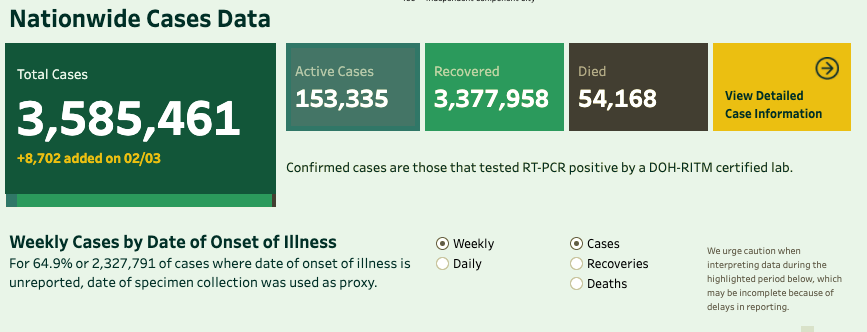
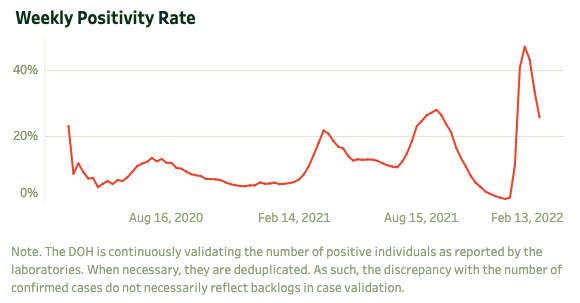
two-week growth rate and average daily attack rate have decreased in Metro Manila
healthcare utilization rates have declined to less than 50 percent, with most persons infected with COVID-19 being quarantined at home instead
Department of Education
- commencement of progressive expansion phase of face-to-face classes for both public and private schools
- schools must be under alert levels 1 and 2
Commission on Higher Education
- gradual resumption of classes
- Alert level 2 can proceed with face to face classes anytime following government guidelines
- Medical and nursing students as vaccinators
Reopening the economy
- increase of venue capacities from 50% to 70%
II. Recommendations
- Psychoeducation training programs on safe return to campus activities. Understanding the concept of liminal space.
- Understanding and focusing career development programs on chaos theory of careers
- Provision for career training programs for practitioners offering employee assistance programs
- More topics on dealing with changes brought forth by industry 4.0
References:
- https://doh.gov.ph/covid19tracker
- https://www.deped.gov.ph/2022/02/02/on-the-expansion-phase-of-limited-face-to-face-classes/
- https://interaksyon.philstar.com/trends-spotlights/2022/01/12/208439/ched-advisory-limited-in-person-classes-in-heis-under-alert-level-3-raises-eyebrows/
- https://ched.gov.ph/medical-nursing-students-can-now-be-vaccinators/
- https://newsinfo.inquirer.net/1547424/no-vax-no-ride-policy-lifted-under-alert-level-2-says-ano
November 2021 Philippines Report
Situationer:
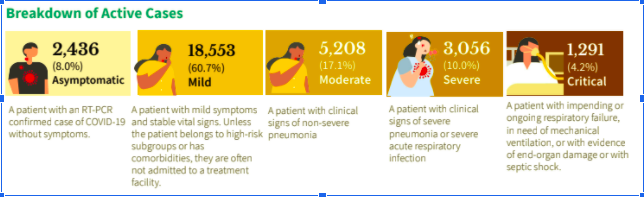
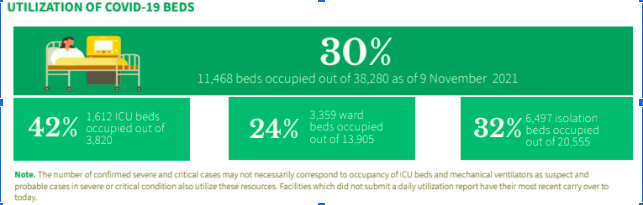

- DOH recorded 30,544 active cases with the majority of the patients exhibiting mild symptoms (18,553; 60.7%) while 1,291 patients are in critical condition (4.2%).
- 65,764, 376 vaccinated; average daily doses 765, 422
- Use of alert levels system for COVID19 response
- Metro Manila under Alert Level 2 beginning November 5, 2021
- Intrazonal and interzonal movement shall be allowed.
- Business establishments have increased capacity (maximum 50% indoor; maximum 70% outdoor)
- Visitor or tourist attractions such as libraries, archives, museums, galleries, exhibits, parks, plazas, public gardens, scenic viewpoints or overlooks, and the like;
- Cinemas and movie houses;
- Limited face-to-face or in-person classes for basic education subject to prior approval of the Office of the President;
- Limited face-to-face or in-person classes for higher education and for technical-vocational education and training;
- Licensure or entrance/qualifying examinations administered by their respective government agency, and specialty examinations authorized by the IATF subject to the health and safety guidelines as approved by the IATF;
- Dine-in services of food preparation establishments such as kiosks, commissaries, restaurants, and eateries, subject to DTI sector-specific protocols;
- Personal care establishments such as barbershops, hair spas, hair salons, and nail spas, and those offering aesthetic/cosmetic services or procedures, make-up services, salons, spas, reflexology, and other similar procedures including home service options, subject to the sector-specific protocols of the DTI
- Traffic back to pre-pandemic level
- Online job fairs
- Employee Assistance Programs
Recommendations:
- Psychoeducation and training on resiliency and help seeking behaviours as part of the return to school activities
- Awareness and upskilling in relation to industry 4.0
- Skills gap analysis
References:
- DOH Issue 562, November 10, 2021:
August 2021 Philippines Report
COVID 19 Situationer
- Declaration of Enhanced Community Quarantine (ECQ) in certain areas due to increasing case of COVID19 and threat of the Delta variant
- As of August 8, 13 million have received their first dose of the vaccine and 11.4 million have been fully vaccinated
Situations in schools
- Some schools have opened their school year this week, still utilizing the online platforms
Work Activities
- Work from home arrangements are still in place
- Authorized persons outside residence need to present documents so they can be allowed to pass through
Professional Development
- There is still high consumption of online learning/training materials/sessions.
- More presence of international speakers in the learning sessions.
Impact to careers and career educational programs
- Universities have shifted to online career fairs or job expos
- Internships are also being done online, is possible
- Expressed difficulties in finding a job
- Rise of online content creators
Impact to daily life
- Online market transactions are the main platform for purchase of things
- Deliveries of food and other items are mainstream
- Businesses have transitioned to the use of online mechanisms
- Rise of social learning groups
- Presence of mental health advocacies and services
- Growing interest on online investments and digital currencies
- Inspiration from athletes in the Tokyo Olympics
Areas of opportunity for career services
- Training on digital citizenship
- Training and engagement with international speakers
- Utilization of online learning groups for transfer of information
- Use of apps in the delivery of careers services
May 2021 Philippines Report
by Marose Macaraan
COVID 19 Situation
- National Capital Religion and some nearby areas (NCR plus bubble) were placed on stricter quarantine measures on March 2021-April 2021 due to the surge of cases. This has been lifted recently but border controls are still in place.
- Curfews were put in place.
- This affected places of recreation, entertainment, worship, dining and personal care services.
Situations in schools
- Schools are still utilizing the online mode for the delivery of the classes.
Work Activities
- Work from home arrangements is still in place.
Professional Development
- High consumption of online learning/training materials/sessions.
Impact to Careers and Career Educational Programs
- Universities are gradually shifting to online career fairs or job expos
- Internships are also being done online, when possible
Impact to daily life
- Online market transactions are the main platform for purchase of things
- Deliveries of food and other items are mainstream
- Businesses have transitioned to the use of online mechanisms
- Rise of social learning groups
Areas of opportunity career services
- Retooling and upskilling
- Adopting an entrepreneurial mindset
- Utilization of online learning groups for transfer of information
February 2021 Philippines Report
by Marose Macaraan
Philippine COVID Situation
528, 853 – confirmed cases; 10874 deaths (as of Feb3, 2021)
General Community Quarantine is in place in the following areas: National Capital Region, Davao City, Batangas, Cordillera Administrative Region, Tacloban City, Davao del Norte, Lanao del Sur and Iligan City while Santiago City, Ormoc City and all other areas are placed under the Modified General Community Quarantine (MGCQ) until February 28, 2021
The Philippines will receive three million vaccine doses by end of February. The first to be inoculated will be the healthcare workers, government frontliners, uniformed personnel, poor population and other vulnerable sectors of the society. The next jab to be given on the second quarter will be the country’s priority sectors including economic frontliners and laborers such as drivers, food industry workers, social service workers and life support service workers
The 4 Pillar Socioeconomic Strategy
- Pillar1: Emergency Support for vulnerable groups
- Pillar 2: Marshalling resources to fight COVID 19
- Pillar 3: Monetary actions and other financing support
- Pillar 4: An economic recovery program to create jobs and sustain growth
October 2020 Philippine Country Report
by Marose Macaraan
COUNTRY SITUATION
- 373,144 COVID-19 cases (As of October 27, 2020)
- DOH emphasized the need for compliance to and proper implementation of national guidelines at the local government level
- Public transport has been made available
- Places of worship is allowing 30% capacity
- Businesses have opened on a limited capacity as well
- Private schools have online classes, while public schools are using modules
- Universities are transitioning to online job fairs
- Some hotel facilities are currently being used for quarantine areas for OFWs
- With the approval of the mental health law, there has been an increase in usage of EAPs for online counselling. There are more companies now offering EAPS.
- Continuous increase in consumption of online training and certifications. There is preference for free trainings.
- Increased collaboration between various organizations offering free trainings.
OPPORTUNITIES FOR CAREER ACTIVITIES
- Opportunities for career conversations
- Collaboration with various career and placement organizations about various topics and career (SFI, CDAP and APPCUI)
- Collaboration with universities on new trends in career placements activities and services
- Collaboration with various human resource practitioners on new trends in hiring, recruitment and talent development
- Collaboration with organizations offering EAPs.
- Opportunities for training university career practitioners with the new trends (e.g. software, placement programs and systems)
- Providing information sessions for various career organizations on trends in hiring, recruitment and talent development
IMPLICATIONS
- Use of platform, budget, marketine
July 2020 Philippine Country Report
by Marose Macaraan
COUNTRY SITUATION
- Most of the areas transitioned to general community quarantine
- Areas where there are more cases remained under the enhanced community quarantine
- Those GCQ areas shall observe the following:
- Select workers will be allowed to go out and work in phases
- Those aged below 21 and above 60, and high health risk individuals shall continue to stay at home
- Partial opening of non-leisure shops and malls
- Mandatory temperature check
- Mandatory wearing of masks
- Mandatory use of alcohol
- Resumption of classes in higher education institutions
- Resumption of priority and essential construction projects
- Resumption of public transportation at a reduced capacity
- Curfew for non-workers
- Continued unhampered movement of goods.
IMPLICATIONS TO LABOR AND EMPLOYMENT: Highlights of the April 2020 Labor Force Survey (June 5, 2020)
- Unemployment rate rose to 17.7 percent accounting to 7.3 million unemployed Filipinos in the labor force in April 2020. This is a record high in the unemployment rate reflecting the effects of Corona virus disease 2019 (COVID-19) economic shutdown to the Philippine labor market. Unemployment rate in January 2020 was 5.3 percent while in April 2019, it was recorded at 5.1 percent.
- Labor force participation rate among Filipinos 15 years and older is estimated at 55.6 percent in April 2020, the lowest in the history of Philippine labor market.
- Employment rate in April 2020 fell to 82.3 percent from 94.7 percent in January 2020. In April 2019, it is posted at 94.9 percent. This translates to 33.8 million employed persons in April 2020 from 41.8 million in April 2019.
- Average number of hours worked per week also fell to 35.0 in April 2020, a drop from 41.8 hours per week in April 2019.
- Employed persons with job but not at work is reported at 38.4 percent or 13.0 million of the total employed.
- All regions reported double-digit unemployment rates. The highest unemployment rate was in Bangsamoro Autonomous Region in Muslim Mindanao (BARRM) at 29.8 percent. It is followed by Region III (Central Luzon) and Cordillera Administrative Region (CAR) with unemployment rates recorded at 27.3 percent and 25.3 percent, respectively.
- Demand for online professional development training programs
- More focus on skills development
- Leniency on license renewals of professionals
- Up-skilling on use of technology to deliver various services (academe and business sectors)
Singapore’s E2I Learning Visit to Manila
by Carla Siojo
 The management team of e2i (Employment and Employability Institute) Singapore, https://e2i.com.sg/, was recently in the Philippines for a planning retreat at the Heritage Hotel, Manila, from July, 17-19, 2019. The Philippine’s Department of Labor and Employment, National Capital Region (DOLE-NCR)’s Senior Labor and Employment Officer, Ryan Delos Reyes, of the Employment Promotion and Workers Welfare Division, conducted one of the management team’s Learning Sessions.
Ryan Delos Reyes DOLE-NCR’s Learning Session addressed the employment climate of the Philippines, the government’s strategies to improve employment rate/reduce unemployment rate and the challenges for implementation. His comprehensive presentation also included information about Philippine culture and Filipino values.Overall, Ryan’s Learning Session was informative, engaging, and entertaining! Both a Q&A session and dinner followed; where conversation continued to focus on the employment climate in Manila and its similarities and differences to Singapore’s.
In addition to e2i Singapore’s CEO, Gilbert Tan, Deputy CEO, Vicky Wong, and their 22 team leads, Ryan Delos Reyes’ Learning Session participants also included our very own APCDA President, Carla Siojo, as well as APCDA Administrator, Emily Lizada. The photo is of Ryan opening the e2i Singapore Learning Session.
The management team of e2i (Employment and Employability Institute) Singapore, https://e2i.com.sg/, was recently in the Philippines for a planning retreat at the Heritage Hotel, Manila, from July, 17-19, 2019. The Philippine’s Department of Labor and Employment, National Capital Region (DOLE-NCR)’s Senior Labor and Employment Officer, Ryan Delos Reyes, of the Employment Promotion and Workers Welfare Division, conducted one of the management team’s Learning Sessions.
Ryan Delos Reyes DOLE-NCR’s Learning Session addressed the employment climate of the Philippines, the government’s strategies to improve employment rate/reduce unemployment rate and the challenges for implementation. His comprehensive presentation also included information about Philippine culture and Filipino values.Overall, Ryan’s Learning Session was informative, engaging, and entertaining! Both a Q&A session and dinner followed; where conversation continued to focus on the employment climate in Manila and its similarities and differences to Singapore’s.
In addition to e2i Singapore’s CEO, Gilbert Tan, Deputy CEO, Vicky Wong, and their 22 team leads, Ryan Delos Reyes’ Learning Session participants also included our very own APCDA President, Carla Siojo, as well as APCDA Administrator, Emily Lizada. The photo is of Ryan opening the e2i Singapore Learning Session. Journey to Meaningful and Purposeful Careers in the Philippines
by Prof. Lucila O. Bance, PhD, RGC, RPsy Country Director for APCDA and Stephanie Anne C. Lu, MA, RPm, RGC Chairperson, Career Services University of Santo Tomas

 The University of Santo Tomas is one of the Model Career Centers in the Philippines (USAID-STRIDE, 2018). With around 45,000 students, the university directs its efforts to realize its overarching objective: empowering Thomasians towards meaningful and purposeful careers. Having meaning and purpose in one’s career is a product of self-discovery, informed decisions and application of one’s strengths and skills. Their Career Services support the Academic Units of the University by providing additional learning experiences that promote students’ self-discovery, encourage exploration of opportunities available to them and assist them in planning and realizing their desired career goals.
 Activities are aligned according to the roles of the Career Services team. In terms of Training for Career Services, the team offers the Thomasian the G.U.T.S., Gear-up Tools for Success or ThomGUTS Program. This ThomGUTS Program is a series of career seminars and workshops that run across all year levels with defined career themes, mock interview sessions, online résumé critiquing and the Career Ambassadors Program. Through the variety of ThomGUTS sessions, industry partners as well as alumni leaders in the field are engaged and bring back invaluable insights, tips and information to the students. Topics covered include Thomasian Identity, Career Exploration, Personality Development (e.g. Communication, teamwork and collaboration skills), Job Preparation and Management Skills, as well as Career Leadership. Mock Interview sessions and online résumé critiquing contributes to students’ enhancement of job preparation and confidence-building. The Career Ambassadors Program empowers student volunteers to be leaders in facilitating career activities to their fellow students.
Career Services also serves as one of the windows through which industries can collaborate and build partnerships with the University. Contributing collaborations include Career Fairs, Employer Information Sessions and On-campus recruitment. Career Information is also provided among the students (e.g. job and internship opportunities and online resources and tools).
Fig. 2. Career Services in line with the identified core roles of the Career Services team
Integral to students’ career development is their ability to process their experiences, set goals and overcome concerns that may block their progress. Career Counseling and Coaching, carried out by licensed counselors of the department, assist with experience processing. Career Coaching is a promising tool in promoting mental health in such a way that it focuses on inherent strengths, identification of solutions and expanding vision of oneself through dreams and aspirations.
Throughout all of the activities provided by Career Services, students come to understand that career planning is a lifelong journey wherein curiosity, persistence, flexibility, optimism and risk-taking are key attitudes that will enable them to achieve career success given the ever-changing landscape and transformation of the world of work and careers. Evaluation of the program is getting an overwhelming positive feedback with a good turnout of accumulated data on graduates’ placement.
Report on Career Development in the Philippines
by Lucila O. Bance
In response to the high incidence of youth unemployment in the country, the government approved a convergent program that aims to address the pressing issue of jobs-skills mismatch. A robust working group (WG) was established to develop an inter-agency Career Advocacy Plan intended to immerse parents and students in the realities of the labor market supplemented by the use of Phil Job Net and Labor Market Information (LMI). The WG consisted of the following: Department of Labor and Employment (DOLE); Department of Education (DepEd); Department of Science and Technology (DOST); Commission on Higher Education (CHED); Technical Education and Skills Development Authority (TESDA); and Professional Regulation Commission (PRC). Additionally, the enhancement of academic-industry linkages has ensured that standards, policies and guidelines set by the government are regularly monitored through accreditation of academic programs for sustained implementation of career programs and services. Aside from the government’s WG for Career Advocacy Plan, professional organizations do their significant part in the career development in the country, such as Philippine Guidance and Counseling Association of the Philippines (PGCA), Psychological Association of the Philippines (PAP), Career Development Association of the Philippines (CDAP), Association of Placement Practitioners of Colleges and Universities (APPCU) and Integrated Professional Counseling Association of the Philippines (IPCAP).
APPCU
Carla Siojo, MA, APPCU Vice-President
The 10th Anniversary and 8th Annual Convention of APPCU took place at St. Scholastica’s College, Manila on 8-9 March 2018. The event convened placement practitioners, career guidance practitioners, guidance counselors, career guidance advocates from colleges and universities and HR practitioners from industry to increase their knowledge of workforce trends in this era of the 4th Industrial Revolution. Participants were exposed to learning sessions that aimed to hone and develop skills in personal branding, meta-coaching, networking and use of big data in order to efficiently and effectively perform their duties and responsibilities and improve existing career services.
The theme of the Convention, “10 to the Next 10: APPCU Surges Ahead!” affirmed the 10-year old existence of APPCU, and the challenge for the organization to surge forward to the next 10 years! The Convention also affirmed APPCU’s commitment in developing 21st century skills of placement practitioners in order to remain relevant and effective in helping students transition from school to a competitive global workplace and in bridging the gap between the existing jobs and skills mismatch. The event was sponsored by ServeHappy Jobs and Globe Telecom, Inc.
The invited resource speakers from industry and academe for the 2-day event received excellent ratings from the participants. The speakers and topics included: Grace Abella-Zata, President, Corporate Executive Search, Inc., who talked about “Hiring Potential Talents for the Workforce”; Maria Luz C. Vilches, Ph.D., Vice President for the Loyola Schools, Atene de Manila University, who gave “A Response from the Academe on Preparing Potential Talents for the Workforce”; Tisha Rosales, Meta-Coach from BreakFree Workshop gave a plenary workshop on “Harnessing the Power of Corporate Personal Branding”; Julius Paras, Senior Vice President, Customer Engagement and Country Manager of Kalibrr, talked about “Making Big Data Work for You and gave Alumni Engagement Insights from the Ivy League”; Florence T. Ladion, RGC, Financial Consultant and Assistant Unit Manager at Prulife, UK, shared the importance of “Networking as an Art of Establishing Partnerships”; and Marie Geraldine R. Samson, Meta-Coach at BreakFree Workshop shared “The Basics of Meta-Coaching.”
Overall, the Convention was informative, interesting and enriching. The knowledge and best practices shared by the resource speakers inspired the participants to improve their placement and career practice. The Convention also provided an avenue to connect and reconnect with those who work at colleges and universities and facilitate the nation’s young people realizing meaningful employment.
The National Skills Commission’s future market focus: The NSC is developing a range of information, resources and tools to support Australia’s economic recovery from COVID-19. It will focus on determining skills shortages and surpluses, assessing the nature of labour market recovery, analysing structural shifts and identifying current Jobs and Education Data Integration or JEDI is aiming to deliver world-leading intelligence on skills needs. By harnessing the best and widest range of labour market, skills and education data available, JEDI can identify what skills from a person’s current or previous employment can transfer to different jobs that use similar skills. It also identifies skill gaps between the different jobs recommended before showing VET courses available to fill the gap. https://www.nationalskillscommission.gov.au/part-2-matching-skills-and-jobs-post-covid-19
Building a Model Counseling and Career Center in the Philippines by USAID STRIDE
Lucila O. Bance, PhD, Director, Counseling and Career Center, University of Santo Tomas
Three years ago, a Model Counseling and Career Center (CCC) in the Philippines was built to address the challenges and meet the needs of the 21st century and the directional goals of the University of Santo Tomas. The development was supported by a grant from the United States Agency for International Development, Science Technology Research for Innovation Development (USAID STRIDE). The strategic landscape, expectations and outlook for Counseling and Career Services evolved at a rapid rate and included the retooling of 43 guidance counselors and 4 staff (1 Office Secretary, 2 Psychometricians and 1 Associate for Career Placement ). The resultant structure is comprised of 2 major sub-units under the CCC: the Counseling Services Unit and the Career Services Unit.
The Counseling Services Unit takes care of ThomRISE (Thomasian Resources for Intensifying Student Empowerment) with programs on: Orientation and Information; Peer Assisted Study Success (PASS); Peer Facilitator Training; Academic Counseling; Personal, Emotional and Social Counseling; and Intervention Programs for Special Groups.
The Career Services Unit takes care of ThomGUTS (Thomasian Gear Up Tools for Success) and ThomCARE (Thomasian Career Readiness and Employment) with programs on: Career Exploration; Career Ambassadors; Career Counseling; Resume Clinic; Career E-Portfolio; CarSem (Career Seminars with Alumni and Industry Component); Life and Career Skills Development; Student Career Placement & Industry Partnerships; Mock Interviews; Career Fairs (On-Site Recruitment & Employers’ Information Sessions); and Networking Sessions. Supported by a Psychological Testing and Assessment Committee, ThomACE (Thomasian Assessment towards Competence and Empowerment) takes care of the following activities: Personality & Skills Assessment and Psychological Testing, Interpretation and Counseling. The center is dedicated to deliver comprehensive and evidence-based counseling and career programs and services in collaboration with educators and administrators as well as engagement and strategic partnerships with business and community stakeholders to ensure students’ academic, personal-social and career success.
The Counseling and Career Center, University of Santo Tomas, is recognized not only in the Philippines but in other countries around the globe. In April 2017, the Center’s services were recognized during APCDA’s annual conference which included representation from 23 countries. In June 2017, the platform was presented at the International Centre for Career Development and Public Policy (ICCDPP) held in Korea; with 29 participating countries.
In 2017-2018, USAID STRIDE consultants from William Davidson Institute (WDI) at the University of Michigan spearheaded a career caravan in the strategic areas in the Philippines (Cebu, Legaspi, Davao and Metro Manila) to showcase the roadmap to develop Model Counseling and Career Centers in the Philippines. Along with the all out support of the CCC team and the top administrators of the University of Santo Tomas, led by its Rector, Rev. Fr. Herminio V. Dagohoy, O.P., the platform aimed to educate future-ready, Filipino graduates by creating and transforming counseling and career centers for youth, the nation and the global community at large.
The Philippines — a Haven of Festivals
by Aira Leigh C. Bagtas
 If you visit the Philippines in spring or summer, you have your choice of “fun in the sun,” or joining festivals or fiestas. Attending these celebrations not only ensures a good time (and a full stomach) but also provides a deeper insight into Philippine culture and traditions.
Ateneans At The Vanguard Of Nation-Building
by Florence Ladion
 In 1872, a 12 year old Jose Rizal entered the Ateneo Municipal de Manila (now the Ateneo de Manila University) where for the next five years, he was immersed in studies that not only sharpened his intellectual capability but also deepened his love for God and country. Such were, and still are, the strongest attractions of an Ateneo education.
For more than 150 years now, the Ateneo de Manila University has remained one of the most prestigious and comprehensive universities in Southeast Asia — participating meaningfully amidst the changing national and global milieus. The Ateneo has been at the vanguard of contributing to nation building. Drawing from the Jesuit tradition of faith, character formation, justice and civic engagement, Ateneans are taught to grow personally and spiritually. They are encouraged to not just think of themselves but also of their communities. “To be men and women for others” is at the core of every Jesuit identity, and ultimately, of every Atenean.
In 1872, a 12 year old Jose Rizal entered the Ateneo Municipal de Manila (now the Ateneo de Manila University) where for the next five years, he was immersed in studies that not only sharpened his intellectual capability but also deepened his love for God and country. Such were, and still are, the strongest attractions of an Ateneo education.
For more than 150 years now, the Ateneo de Manila University has remained one of the most prestigious and comprehensive universities in Southeast Asia — participating meaningfully amidst the changing national and global milieus. The Ateneo has been at the vanguard of contributing to nation building. Drawing from the Jesuit tradition of faith, character formation, justice and civic engagement, Ateneans are taught to grow personally and spiritually. They are encouraged to not just think of themselves but also of their communities. “To be men and women for others” is at the core of every Jesuit identity, and ultimately, of every Atenean. Ateneo’s gentle genius, the late Fr. Horacio de la Costa, SJ, was one of them.
An effective communicator, extraordinary writer and esteemed historian, de la Costa was the first Filipino Superior of the Philippine Province of the Society of Jesus. This remarkable accomplishment was followed with an appointment as General Assistant and Consultor to then Jesuit General Fr. Pedro Arrupe. Yet, what may most be remembered about de la Costa was not his long list of achievements nor his writings, it was that he used his exceptional talents to give glory to God and serve others. He did everything with love, devotion, and service, whether it was writing Light Cavalry (a book about the 400th anniversary of the Society of Jesus) or imparting knowledge to younger Ateneans as a History professor. He was even awarded the Medal of Freedom by the United States government for his role in helping the resistance movement during World War II.
With an education rooted in Ignatian spirituality, it is not surprising to see Ateneans championing the rights of those most vulnerable. Ateneans are change catalysts and who better to personify this than two men who gave up their life fighting for democracy: Edgar Jopson and Evelio Javier.
Javier also graduated from the Ateneo High School with first honors. In 1963, he completed his AB History and Government and went on to study at the Ateneo Law School. As the youngest provincial governor in the Philippines at the time – he was 29 years old – Javier’s passion for service and dedication personified the Ignatian spirit of faith, courage, and justice. At the peak of the snap presidential elections, Javier was killed by hooded gun men. His untimely demise on Feb. 11, 1986 was seen as one of the flames that ignited the 1986 People Power Revolution.
The Ateneo way is a way of oblation. More than harnessing the academic excellence of its students, the Ateneo helps mold future leaders who will be at the forefront of nation building. Noted alumni who contribute through jobs and growth are business tycoons Manuel V. Pangilinan (First Pacific), Lourdes Josephine Gotianum (Filinvest Development), Roberto Ongpin (Alphaland Corporation), Alfredo Ramos (National Bookstore), and Tomas Alcantara (Alson Consolidated Resources), to name a few. Young alumni like (Reese Fernandez-Ruiz (Rags2Riches), Mark Ruiz (Hapinoy) and Eleanor Pinugu (Mano Amiga Philippines) are also doing their part in addressing developmental problems through their social enterprises. Fernandez-Ruiz was, in fact, included in Forbes’ 30 under 30 Social Entrepreneurs for 2015.
The Ateneo is committed to help rebuild the nation and has scaled up efforts through various initiatives. Among such programs are Gawad Kalinga (which helps build homes and communities in depressed areas); Pathways to Higher Education (assists academically-gifted but underprivileged youth from the public school system complete college education); the Ateneo Center for Educational Development (helps improve public basic education through programs); and the Disaster Response and Management team (assists in helping victims of natural calamities).
One hundred forty-four years after our national hero Jose Rizal became an Atenean, the Ateneo de Manila University continues to form men and women who will build knowledge, inspire and empower others, but most especially, use their gifts and talents for the greater glory of God.
Career Development in the Philippines: A Rough Sketch of June 2014 to February 2015
by Carmen Siojo
 Individual and group Career Counseling/Consultation (face-to-face and/or online) as well as on-campus recruitment initiatives (e.g. recruitment presentations, pre-employment testing) with Students and Alumni typically take place throughout the year at most universities and colleges in the tertiary level in the Philippines. Most institutions resume classes in June and begin career orientation programs for juniors and seniors in July. Mid-year conventions for the two major career professional organizations take place in August.
APPCU is committed to assist in the establishment, growth, and development of functional placement programs of its member schools. More specifically, it seeks to:
Individual and group Career Counseling/Consultation (face-to-face and/or online) as well as on-campus recruitment initiatives (e.g. recruitment presentations, pre-employment testing) with Students and Alumni typically take place throughout the year at most universities and colleges in the tertiary level in the Philippines. Most institutions resume classes in June and begin career orientation programs for juniors and seniors in July. Mid-year conventions for the two major career professional organizations take place in August.
APPCU is committed to assist in the establishment, growth, and development of functional placement programs of its member schools. More specifically, it seeks to:
- enhance the knowledge, competencies, and opportunities for professional development of each member;
- make resources and information available to its member schools for the effective and efficient delivery of their placement services;
- strengthen linkages among member schools and with partners in the four employment sectors.