

Malaysia Visa Policy

General information

People living in most APCDA Member Countries do not need a visa to enter Malaysia.  However if you live in Bangladesh, Bhutan, Nepal, Pakistan, or Sri Lanka, you do need a visa.

If you live in a country that is not an APCDA Member Country, please check here to see if people from your country are required to apply for a visa.

A Yellow Fever Vaccination Certificate must be presented upon arrival in Malaysia for travelers from countries at risk of yellow fever infection.

For more information or to apply for an E-Visa, please visit https://malaysiavisa.imi.gov.my.

A Malaysia Digital Arrival Card (MDAC) is mandatory for all travelers (except Singapore residents).  This online form cannot be completed earlier than 3 days before arrival. The official link to complete the MDAC online is: https://imigresen-online.imi.gov.my/mdac/main  There is no charge for completing this form and websites that do charge are not official websites.

Conference Campus Map

Click here for a Campus Map.  Urban Living Residence (where most of us will stay and where the tours leave from) Is on the bottom left of the map and has an orange roof.  The Opening Session will be held in the Auditorium. The afternoon breakout sessions will be in the CRELAMP building. The walk from Urban Living to the Auditorium is about a half kilometer. The short video below shows you what it looks like. For an Accessibility Map, click here.

Recommended Hotels

When making travel plans in Malaysia, we recommend using Agoda.com. The information is more accurate for Malaysia than other travel websites. The Universiti Malaya is between Petaling Jaya (a large city adjacent to Kuala Lumpur) and Bangsar (a neighborhood in Kuala Lumpur). Please see the Hotel Map on the right.

The staff and keynote speakers will stay at the Urban Living Residence and tours will begin from there.  This is the closest and most convenient place to stay.  It has a 3-star rating. Rooms for APCDA conference attendees start at $29 USD (120 Malaysian Ringgit) for a single without breakfast. Please see the walking map below.  The Auditorium where most of our events will be located is circled in yellow.

Please click here to access the link to make reservations at Urban Living:


Urban Living Residence

There are several other nearby hotels and attendees are welcome to choose any hotel they wish. Nearby 5-star and 4-star hotels include:

In south Bangsar (part of Kuala Lumpur)

  1. Wyndham Grand Bangsar
  2. Imperial Regency Suites Kuala Lumpur
  3. V E Hotel & Residence

In Petaling Jaya (a separate city adjacent to Kuala Lumpur)

  1. Pacific Home Petaling Jaya by Seven Sins
  2. Pacific Tower Petaling Jaya By Shamrock
  3. CentreStage Petaling Jaya I HomeBrickz
  4. Crystal Crown Hotel, PJ
  5. Hotel Armada Petaling Jaya
  6. Sheraton Petaling Jaya Hotel
  7. Hilton Petaling Jaya

Hotel Map


Urban Living Residence: Connections and Camaraderie

By Ruth McAteer Urban Living at Mahsa Avenue is more than a place to sleep—it’s a thoughtfully designed hub for forging friendships and connecting with people beyond conference sessions. The hotel offers a rich array of communal spaces to mingle: cosy lounge areas for conversation, board-room–style spaces for round-table discussions, open-air nooks with relaxing hammocks and city views, and relaxing outdoor spots. Rooms come with all the essentials—desk space, air conditioning, and WiFi—and are available in a range of affordable options from standard rooms to penthouses, accommodating 1–4 guests. Our group of four stayed in the Penthouse, which features two bathrooms and a living room—perfect for unwinding after a day at Universiti Malaya! The hotel’s relaxed atmosphere invites you to gather, share ideas, or simply decompress with new colleagues, making every moment of APCDA 2026 feel special. Kedai KL: Curated Boutiques, Curious Bites Small but mighty  Kedai KL sits just beneath Urban Living. It offers playful, quirky shopping—from Have a Nice Day, a Malaysian brand perfect for cheerful, customizable totes, patches, stationery, and gifts, to RC Deaf Cafe, run by the Malaysian Deaf community. This vibrant spot not only serves tasty bites but also features beautiful handcrafted jewellery and other handmade items—great for picking up a unique Malaysian keepsake after a day at the conference.

Delights, Drinks, and Delicacies

With a plethora of options to choose from, you can sip a delicious drink at the Lazy Sunday Club, enjoy a sweet treat from Anna Donna, and savor a meal at Three Guys, CanCan Bento, or RC Deaf Cafe. If you prefer a larger space for group dining, Pokok KL has you covered with ample room for conversations and shared meals

Perfectly Positioned

Should you forget any essentials, Mercearia convenience store is located directly opposite Urban Living, where you can easily pick up practical necessities, snacks, and toiletries. 

With excellent proximity to Universiti Malaya, Urban Living is comfortably within walking distance, though Grab (ride-hailing) and public transport is readily available for those preferring this option.

Within 30 minutes by car from Urban Living, you can explore iconic Malaysian attractions, including the magnificent Batu Caves, offering rich cultural insight and spectacular photo opportunities, or the renowned Petronas Twin Towers, both perfect for absorbing into your trip for memorable cultural experiences. 

Urban Living as Your Community Corner

Staying at Urban Living means stepping into a welcoming base crafted for connection—rest, nourishment, and social interaction all in one place. Sleep well, dine together, and discover new colleagues right where you stay. We can’t wait to welcome you there!

APCDA Conference: Fees to Join & What You Need to Prepare​

By Tuan Anh

If you are planning to attend the upcoming conference of the Asia Pacific Career Development Association (APCDA), this guide explains how the conference dates and formats work, what fees to expect, and what to prepare before traveling to Kuala Lumpur, Malaysia.

All costs are shown in USD for easy planning.

Understanding the Conference Dates & Format (Important)

The APCDA Conference is hybrid, and the format depends on the dates, not on different types of participants.

20–24 April 2026

Virtual-only

All sessions during this period are delivered online only.
Participants from any country can join virtually.

27–30 April 2026

Hybrid (In-person + Virtual)

During these dates, sessions are delivered both on-site in Kuala Lumpur and online.

You can choose to:

  • Attend in person in Malaysia, or
  • Continue to join virtually if you are unable to travel

In short:
Either a Virtual or an In-person Registration include the same 5 days between April 20 and April 30.

The first week, we are all virtual. The second week, some people continue to participate virtually and others go to Kuala Lumpur to participate in-person.

1. Conference Registration Fees

Estimated registration range:
$280 – $380

Fees vary depending on:

  • Membership status (member will be charged different amounts for regular, student, or retired membership)
  • Early-bird vs. regular registration
  • Participation type (in-person or virtual)

Optional add-ons:

  • Pre-conference or professional development workshops and tours: $80 – $150
2. What to Budget (In-person Participants)

If you plan to attend in person from 27–30 April 2026, typical costs include:

  • Conference registration: $280 – $380
  • Round-trip airfare: $180 – $900
  • Accommodation (4–5 nights): $120 – $450
  • Meals: $40 – $150
  • Local transportation: $30 – $80
Estimated Total Budget
Travel StyleEstimated Total (USD)
Budget-focused$650 – $800
Moderate comfort$850 – $1,050
More flexible$1,100 – $1,400

These figures are indicative and depend on travel choices and booking timing.

3. Travel & Logistics

To keep this article concise, detailed guidance on:

  • Getting to Kuala Lumpur
  • Accommodation options
  • Local transportation
  • Visa considerations
  • Practical travel advice

is available on the Travel Tips page on the APCDA website.
Participants are encouraged to review this page when planning their trip.

4. What to Prepare Beyond Fees
Professional Preparation
  • A short introduction about your role and organization
  • Business cards or digital contact details
  • Key questions or challenges you want to explore
  • Presentation materials (if you are a speaker)
Conference Planning
  • Review the program in advance
  • Decide which sessions you will attend virtually and which in person
  • Leave space for informal conversations and networking, which are a core part of the APCDA experience

Whether you join virtually from 20–26 April or attend in person in Kuala Lumpur from 27–30 April 2026, the APCDA Conference offers meaningful learning, connection, and global perspectives in career development. We look forward to welcoming you.

Touching Down in Malaysia: From the Airport to the City

By Li Fern Tong

Here’s a simple guide to help you navigate your way to Malaysia. From visa checks to making your way into the city (mainly Urban Living Residence), this will walk you through the essentials you need for a fuss-free arrival — minus the jetlag.

Travelling from the Airport to Kuala Lumpur

Taxis: Blue, Red and White and of course “Green”

While there are several types of taxis (cabs) in Malaysia, let me introduce you to the familiar three.

Executive Blue
A little more atas (colloquial Malay: high class), hence the higher fare. These taxis are commonly found at hotels and, occasionally, major tourist spots. You can also book them on Grab under Premium.

Humble Red & White
Your meter-friendly, pocket-friendly option. Occasionally, you may come across Hagglers near tourist areas—please say NO to fixed fares (except for authorised Airport taxis), as all should run on the meter. These taxis are everywhere, and when they’re not, you can book them via Grab under Taxi.

Grab
While green is the brand colour, the cars come in every colour. Fares vary by timing, category, and availability. Affordable during non-peak hours, but prices can jump during demand spikes—especially weekday 7am–9am and 4pm–8pm and a midnight surcharge of 50% till 7am. Grab also offers many other handy services, so having the app on your phone is a smart move once you land in the Land of “Truly Asia”.

How to Get From the Airport to Urban Living Residence (or KL City)

If you fancy a direct trip, head to the Airport Taxi Counter to purchase a coupon. State your destination and pay a fixed price—or simply open your Grab SuperApp and request your ride.

A more economical choice is the KLIAexpres:

  • 28 minutes from KLIA
  • 33 minutes from KLIA2

It takes you straight to KL Sentral, where you can purchase a taxi coupon or Grab your way to Urban Living Residence (approx. 15 minutes). You may purchase tickets online and enjoy better deals (including roundtrip options) here. Under “Products & Fares,” you can explore additional passes for travelling around KL.

The entire journey—regardless of taxi or train—takes roughly 1 hour, including transit.

Estimated Costs

  • Airport → Urban Living Residence by Taxi/Grab: RM80–RM100 (including toll)*
  • Airport → KL Sentral via KLIAexpres (RM55) + Taxi/Grab (RM18–RM25)*
  • Disclaimer: Rush hour fares can rise by 50% to over 200%. When that happens, it’s a great excuse to enjoy a local bite while waiting for prices to stabilise.

And that’s pretty much it — safe travels, and see you when you reach the Land of “Truly Asia”.

Your KL Guide: Moving Around, Paying Around & Settling In

By Li Fern Tong Now that you’ve landed, unpacked, and hopefully treated yourself to your first Malaysian meal, here’s a friendly guide to help you navigate Kuala Lumpur with confidence. Traveling Around University Malaya and Urban Living Residence While Grab and taxis get you around conveniently, Kuala Lumpur’s public transport system is also easy enough for your own self-guided adventure.

A Note on Buses During Rush Hour

My advice is Skip the buses —you never quite know when they’ll turn up. Important to note – buses only accept the Touch ’n Go (TnG) card; no cash accepted.
This isn’t like Hong Kong’s Octopus card—TnG is mainly for transportation related transactions. It also makes train travel seamless and is cheaper than buying tokens from machines, which typically require cash. You can purchase a TnG card at:

  • KLIA Express counter
  • Watsons at KLIA
  • Convenience stores at KL Sentral (7-11, KK Mart, Watsons)
  • Nu Sentral’s TnG Hub (Level 2), where you may even find limited-edition designs, like the 2024 edition illustrated by a local artist.
The Moolah

Malaysia uses Ringgit Malaysia (RM).
Malaysia is one of the global leaders in QR code payments. You’ll commonly see red DuitNow QR codes that accept bank apps and major e-wallets. While cash still helps in some situations, many retailers have gone cashless.

PSA: Always double-check that the QR code belongs to the correct vendor. (True story—I once paid a neighbouring stall due to my slightly cross-eyed moment!) Ensure the vendor’s displayed name matches what appears on your screen.

Do note: street-hailed budget taxis operate on cash.

Currency Exchange

Rates are typically better at private money changers. Hold on to your foreign currency until you reach KL. Some good options include:

  • At KL Sentral: One at the Departure Hall
  • Several more at Nu Sentral (Lower Ground)
  • Mid Valley Megamall (via RapidKL bus T790 from Urban Living Residence) — often competitive, but queues can be long.

Grab SuperApp

Use Play Store or App Store to download Grab to your cell phone before travelling. When you start the Grab App, it will ask where you are going. Choose “Malaysia” –> “Klang Valley”. Then find your “Profile” and add a payment method. Once in Malaysia, simply connect to the internet, and you’re ready to go.

With GrabPay, you will be able to make seamless payment too for most of your shopping needs and even get to order delivery and have sumptuous authentic local food delivered to your doorstep or lobby.

Touch & Go eWallet (TnG)

If you prefer an even more seamless experience, download the TnG eWallet, widely accepted even by hawkers and street vendors. You can check if your region is eligible here.

And that’s it — your quick cheat-sheet to finding your way around KL like a semi-seasoned local. Welcome to KL


Sunset to Sunrise in Cyberjaya: Lakes, Lush Landscapes, and Local Bites

By Ruth McAteer

I’ve been a proud resident of Cyberjaya for nearly 12 years, and I’ve grown to love this incredible city. Born from Malaysia’s Multimedia Super Corridor vision in the late 1990s, Cyberjaya today is a vibrant hub of technology, education, and innovation located just 40 minutes outside Kuala Lumpur. It’s a city that has preserved welcoming neighbourhoods, calm green spaces, and a small-town charm even as it expands and pushes outward. I’m delighted to share some of my favourite bits —from tranquil parks and eye-catching architecture to tasty discoveries—so you can experience Cyberjaya from the heart. 

Morning: Lakeside tranquillity and a taste of Malaysian life

  • Start at Taman Tasik Cyberjaya (Cyberjaya Lake Park). These wetlands encircle a peaceful lake, perfect for a serene morning stroll; at roughly 1.3km, it could take 20-40mins to complete a circuit. Observe the indigenous flora and fauna as you go, walking along elevated platforms that cut through the dense foliage and watch how the water reflects the skyline. Finish with a walk out to Windchime Island, stopping along the way to greet the resident terrapins below. 
  • On Sundays from 7:30 am until midday, Taman Tasik Cyberjaya is also home to a farmers market; a wonderful spot to sample local produce and bites. 
  • To take a rest and enjoy the excellent outdoor views, find a seat at Cafe By The Lake and enjoy a beverage by Zass Coffee – Teh Tarik and Kopi-O are great choices! 

Bridge to Windchime Island and a wander round the Farmers Market

Lunch and Afternoon: Cooling off and rainforest vibes

  • A short 5-10 minute Grab ride away, check out D-Pulze Shopping Mall for an air-conditioned hub with a range of shops, eateries, and even a cinema and karaoke lounge! It’s a convenient, comfortable spot to cool down, grab a bite, and enjoy entertainment. 

Alternatively, head to Tamarind Square, the same distance away, but offering an architectural difference; an outdoor shopping precinct that can feel like a rainforest stroll. With shops, cafes, and restaurants on different levels set around 3 main courtyards, it’s a space that invites you to peacefully wonder, or enjoy a bite with lush greenery as your backdrop.

Sunset and Dinner: Be transported to the Middle East

  • Head to Taman Tasik SCV (Selangor Cyber Valley) for a perfect lakeside walk as the sun sinks, casting a warm glow over the water and skyline. This lake sits at the edge of Cyberjaya and is my favourite spot to relax and wind down at the close of the day. 
  • Alternatively, cross to the other side of town to catch a different evening view at Cyberjaya Lakeside Park. This is the largest lake in Cyberjaya, offering clear views all the way to Putrajaya in a calming, tranquil space. 
  • To complete the evening, catch a Grab to the NeoCyber area of Cyberjaya (another 5-10 minute ride). There you’ll find exceptional Middle Eastern and Arabic eateries. We love the Lamb Mandi at “Mandi Corner”, kebabs at “Al Rayan”, and the wide variety at “Shamna”, for the kind of flavours that will linger in your memory, when you get back home!

 Sunset at Taman Tasik SCV (Selangor Cyber Valley)

Overnight options and campus trips

  • Option B —  Return to Kuala Lumpur after sunset for a relaxed evening in the city, with easy access to a late drink or night markets, or simply an early night after a lovely day out!  
  • If you stay overnight, you can spend the following day exploring the three main universities in Cyberjaya’s orbit:

From Panel to Plate: Choose An Evening in Bukit Bintang’s Flavorful Pulse

By Ruth McAteer

With plenty of exciting cultural activities just beyond Universiti Malaya, let’s explore three adventures in KL’s bustling Bukit Bintang. Known for its dazzling shopping malls and delicious culinary treats, this district is just a quick Grab ride away—less than 15 minutes from campus. It offers a perfect blend of commerce, art, and appetite.

Trifecta Tour: Shopping, Stunning Eats, and Sleek Design

• Begin at Berjaya Times Square, a massive complex with over 1,000 retail spaces and entertainment options. It’s more than a mall—it’s part shopping, part amusement hub, featuring the Supersonic Odyssey, the longest indoor roller coaster in Asia.

• For food, try authentic Malaysian dishes such as Nyonya Curry Laksa at Kakatoo.

• A five-minute walk brings you to Sungei Wang Plaza, a vibrant, budget-friendly shopping arcade filled with streetwear, fashion, and bargain finds. Stop by the Hawker Centre for quick bites.

• Cross the road to Lot 10, where modern retail meets local and international brands. For a fun dining experience, visit 9.9ramen, where you can customise your own bowl starting at RM9.9.

GMBB Mall: Where Malaysian Identities Shape the Shopping

• GMBB is an artistic hub showcasing Malaysian creativity. You can attend storytelling sessions at Hikayat Fandom, explore galleries, admire sculptures, and shop for handcrafted items by local artists.

• On the 9th floor, catch performances at the Five Arts Centre, a well-known cultural venue.

• Food and drink options are spread throughout the mall, especially on the first floor:

  • Try a refreshing golden rambutan sea cloud at Too Yum
  • Enjoy comfort food at JiakKopi, known for Hainanese coffee, nasi lemak, and traditional kueh

• GMBB offers a unique experience that blends art, culture, and cuisine into one immersive evening.

Jalan Alor — A Street-Food Love Letter

• Around 6 pm, Jalan Alor comes alive with the aroma of grilled meats, durian, dim sum, and skewers. It’s both a food destination and a lively cultural experience.

Street eats to try:

  • Japanese octopus omelette
  • Big takoyaki (Sakura Crab)
  • Teochew siu mai
  • Fresh fruit smoothies (avocado, mango, and more)

• A small tip: rainbow fries may look great in photos, but aren’t always the best in taste.

Sit-down dining options:
Jalan Alor offers Thai, Chinese, and Malaysian cuisine. A highlight is Si Chuan Cuisine, known for crayfish dishes. Pair with salt-and-pepper ribs, tomato and egg, dry-fried cabbage, mantou, rice, and tea for a shared dining experience.

Dessert Finale & Special Stop

• End your evening with a dessert walk along Jalan Alor, sampling:

  • Malay bamboo ice cream
  • Italian tiramisu
  • Japanese soufflé pancakes
  • Northern Chinese tanghulu

• For a more unique experience, visit Limapulo Terrace, a Michelin-listed Peranakan restaurant located in a 1930s heritage building. Its vintage setting and Penang-inspired charm make it a memorable stop.

Top Tips

• Dress for warm weather—outdoor dining remains hot even at night
• Jalan Alor closes around midnight, but many stalls stop serving around 9 pm
• Cash is preferred, though some vendors accept QR payments
• The area is multilingual, with English, Mandarin, Bahasa, and more commonly spoken

PowerPoint to Paradise: A Tioman Escape

Tioman Island is not only a classic Malaysian island escape famed for its diving sites and long sandy bays, but it’s also known for its sea turtle conservation efforts and an 18-hole championship golf course! Here, you’ll find comfortable accommodations, pristine beaches, and that increasingly rare commodity: genuine tranquillity. Let’s dive into curating your perfect post-conference relaxation. 

Getting There From Kuala Lumpur

The journey from KL’s urban jungle to the actual jungle is surprisingly straightforward. It’s a quick one-hour AirAsia hop from KLIA to Johor Bahru’s Senai Airport (costing around RM350) followed by a ferry ride that can take 1.5–3 hours, depending on sea’s mood. We’ve experienced both smooth and rough crossings, and the destination is always worth it.

Top tip: most resorts coordinate transfers with your flight times, so be sure to enquire about boat transfers when you book your hotel.

Finding Your Island Base

As PADI-certified divers, we chose Berjaya Tioman Resort as our base. Situated near Tetek South Bay with stunning views over Rengis Island, this resort provided unlimited snorkelling opportunities and fantastic diving experiences.

It was incredible to encounter the graceful Tioman sea turtles, blacktip reef sharks, and a colourful variety of reef fish, including vibrant parrotfish, elegant angelfish, and charming anemonefish.

For those seeking alternative accommodations, Juara Beach Chalets on the quieter northeast coast offers rustic beachside charm with excellent shore snorkelling.

Beyond the Dive Sites

If diving isn’t your preference, read on to discover what else Tioman has to offer after the hustle and bustle of conference life.

Into the Jungle

Several resorts, including the Berjaya, organise jungle trekking experiences to guide you safely through the outstanding natural landscapes and remarkable biodiversity of Tioman’s interior.

The Berjaya’s popular Bandit Trek explores Tioman’s unique beauty through an enjoyable 1.5–2 hour hike (4km) winding through lush rainforest. Keep your eyes peeled for the magnificent black giant squirrel and diverse tropical plant life.

Island Exploration

Join a Round Island Trip that visits several scenic locations, such as a refreshing waterfall, traditional Juara Village, and multiple snorkelling sites. These excursions provide a wonderful perspective on Tioman’s diversity, including the dramatic Dragon’s Horn peaks. Moving at a relaxed pace leaves ample time for photography and exploration.

Conservation with Heart

For the environmentally conscious seeking purposeful tourism, the Juara Turtle Project offers volunteering opportunities to protect endangered sea turtle populations.

You can join night patrols safeguarding nesting turtles and hatchlings and contribute meaningfully to vital marine conservation.

Expect the Unexpected: Island Golf

Unbelievably, Tioman features an 18-hole championship course that weaves through Berjaya’s grounds, jungle, and coastline. With ocean views, coconut palms, waterfalls, and challenging bunkers, it provides a golfing experience quite unlike any suburban course.

Restoration and Regeneration

I can highly recommend a session at Ayura Spa. Their signature treatment – a soothing massage using heated herbal poultices applied to specific pressure points – is genuinely therapeutic. You can also indulge in their deep tissue massage to address the accumulated tension of conference fatigue.

Perhaps as you’ve come to expect from Malaysia, the food on Tioman is exceptional. For dining, I cannot recommend Matahari Restaurant with their Thai-Indian fusion cuisine at the Berjaya highly enough for beautifully balanced flavours. Located on the beachfront, it offers the perfect relaxing conclusion to a day of island activities.

Your Island Escape Awaits

As you prepare to trade conference halls for coral reefs, Tioman delivers on every promise. From turtle encounters to jungle adventures, sunset cocktails to underwater wonderlands, this Malaysian gem invites you to discover the perfect balance of post-conference activity and restful bliss.

Putrajaya: A Quick, Captivating Escape Just Outside KL

Putrajaya is a must-see destination located only 30–45 minutes from Kuala Lumpur. Having lived in neighbouring Cyberjaya for 12 years, I proudly call this area my hometown and enjoy sharing everything it has to offer. Best known for its stunning floating mosque, Putrajaya exudes peaceful waterside vibes, while on land, IOI City Mall provides a quintessential Malaysian shopping experience. Let’s explore what you can experience during a day trip to this unique urban township.

Morning Calm: Botanic Walk at Putrajaya

• Take a Grab from KL to Putrajaya Botanical Garden for a gentle stroll or rent a bike to enjoy fresh air and lakeside views. Along the way, visit the stunning Moroccan Pavilion (entry RM10). Finish with a refreshing drink and breakfast at the Glasshopper Cafe, known for great food and photo spots.

• Less than five minutes away by Grab, explore Tasik Angsa, where you can observe water birds, then continue to the Lookout Tower at Putrajaya Wetlands for panoramic views. Tip: ask your Grab driver to wait, as the locations are within the same large park area.

• If you want to extend your time, explore attractions like Wetlands Studio Putrajaya with interactive exhibits or Wetland Adventure Park offering activities such as go-karting and abseiling.

Lunch Break: IOI City Mall’s Culinary & Shopping Haven

• Escape the heat with a Grab ride to IOI City Mall, enjoying views of Putrajaya’s iconic bridges along the way. The mall is both a shopping and culinary destination.

• Recommended dining spots include:

  • Ying Xian Canton Cuisine

  • Isabella

  • Kenny Hill Bakers

Expect a wide variety of dishes, from local favourites like brinjal with minced meat and salted fish to Western options like crab benedict.

• You may also consider staying at the Moxy Hotel at IOI City Mall, which is conveniently located about 35 minutes from KLIA, making Putrajaya a great midpoint between the city and the airport.

Dusk by the Water: Putrajaya’s Iconic Landmarks

• In the evening, head to the Putra Mosque (Masjid Putra) via the scenic Seri Wawasan Bridge. The pink-domed mosque appears to float on the lake and is worth exploring both outside and inside. Nearby, you can also view the Prime Minister’s Office.

• Take a relaxing boat ride on Putrajaya Lake to enjoy views of bridges, wetlands, and government buildings from the water.

• After the boat ride, explore dining options along the waterfront and enjoy sunset views. A visit to Chocolate Souq Putrajaya is a great way to end the day.

• If staying at Moxy, don’t miss the rainbow fountain show outside Starbucks at IOI City Mall.

• If returning to KL, Grab rides are easily available from the mosque, offering scenic night views along the bridges.

Cyberjaya: Lakes, Watersports, and University Campus Tour

• Extend your trip by visiting nearby Cyberjaya, where you can walk along the lakefront and try watersports activities.

• Explore Cyberjaya Taman Tasik (Lake Gardens), which hosts a traditional Sunday market from 7:30 am for an authentic local experience.

• With several universities in the area, you can also visit campuses such as:

  • Limkokwing University

  • Multimedia University (MMU)

  • University of Cyberjaya

Putrajaya and Cyberjaya together offer a refreshing mix of nature, architecture, food, and culture—making them perfect for a short but memorable escape from Kuala Lumpur.

Perhentian Paradise: Snorkel, Sun, and Shoreline Secrets

The Perhentians are among Malaysia’s best-known island escapes. Popular with divers, these islands offer a retro vibe, offering largely unchanged accommodations and an unplugged atmosphere. Explore bays and turquoise coves right outside your beach-hut door. Spend lazy days admiring vibrant reefs, interacting with hawkfish, parrotfish, clownfish, sea turtles, and even reef sharks. Though a bit distant from Kuala Lumpur and touchingly basic at times, they invite you to disconnect, recharge, and relish sun-kissed simplicity.

Teluk Pauh Beach: Beautiful turquoise sea, blue skies and a white sandy beach, fringed by pam trees.

Getting there
You can fly from KLIA to Kota Bharu or Kuala Terengganu, which takes around 45 mins. From there, it’s straightforward to take a Taxi or Private car from the airport to Kuala Besut Jetty. (about 45 mins from Kota Bharu or 90 mins from Kuala Terengganu). Boat transfers from Kuala Besut Jetty will be organised by your hotel and leave fairly frequently.

Two islands, one dream, pick your vibe
Kecil (small island) is sometimes called the backpacker island, but don’t let this nickname fool you—luxury options exist (Alunan Resort, Bubu Villa, and the Perhentian Marriott Resort & Spa, which opened in 2024). If you want a touch more comfort while still staying beachy, this could be the Island for you.

Besar (big island) is where we choose to stay to enjoy beachfront spots that are easy on the wallet!

Highly recommended mid-range picks
The Perhentian Island Resort (PIR) – Besar
• 3 nights for 2 adults in May 2026 (Full Board, Premier Beachfront Double): RM1,502.50
• Diving trips are RM150 per adult
• Offshore snorkelling is RM40 per adult.

Abdul’s Chalets – Besar
• 3 nights for 2 adults in May 2026 (Full Board, Deluxe Sea View): RM1,540.00
• First diving trip is free
• Offshore snorkelling is RM55 per person.

Enjoying morning strolls and beautiful beach views of tropical palms and turquoise seas.

The honest low-down
• The vibe: Classic, older-style resorts that feel rustic and simple with no TV and limited WiFi. They still provide the essentials like a fridge and AC, but this is the kind of place that invites you to trade screen time for sea time.
• Snorkelling heaven: Calm coves with easy entry and plenty to see—parrotfish, reef fish, and more right outside your front door.
• Food bites: The on-site meals are reliably tasty, with simple, no-fuss flavours that fit the island vibe. They can be a bit basic at times, but the big plus is all meals included—no scrambling to find somewhere to eat or additional charges sneaking in.

Morning Breeze to Nightfall Ease: A Typical Day on Besar

Morning:
• Take a stroll along the beach, followed by a hearty breakfast to fuel the day.
• Independent snorkelling on Teluk Pauh Beach with warm seas, crystal-clear water, and a myriad of tropical fish for company.
• Quiet downtime on your private deck, soaking in the bay views and feeling the world slow down to island time before heading to the restaurant for lunch.

Afternoon:
• Beginner-friendly diving: Take a dive trip to Turtle Beach and the surrounding reef edges for an easy dive with turtle sightings and vibrant reef life.
• Easy evening rhythm: return to the resort for a relaxed dinner and a sunset that paints the sky as the day dips into evening.

Rustic, simple, beach hut living. Ready to Snorkel! Downtime at the beach.

Besar presses the pause button for the soul. Sun, sea, and simple pleasures come together for recharging, resetting, and room to breathe. If you crave unplugged days, turquoise coves, and turtle dives, Besar is ready to welcome you with open arms.

Genting, Beyond the Theme Park

By Ruth McAteer Genting Highlands is best known for Resorts World Genting and Genting SkyWorlds, however, I relish Genting’s quieter, less well-known side. You can visit unique temples, take in the majesty of the rolling hills, and visit working farms, all alongside the theme parks, malls, and popular casinos. When visiting Genting, I love combining these experiences to craft a relaxing break just outside the city, one that blends local culture, stunning vistas, and the expected bustle. Let’s explore together to create your own unique getaway in the Highlands of Malaysia. Morning: Escape to the Highlands
  • Consider a private car transfer or a comfortable shuttle from Kuala Lumpur for the 45 min journey to the highlands. For a calmer, more tranquil post-conference stay, opt for the mid-valley, rather than the peak, like Hotel and Residence, Swiss-Garden or GEO Resort.
Afternoon: Ease into tranquillity
  • Take a shuttle from your hotel to the Awana SkyWay at Genting Highlands Premium Outlets. Step off the Gondola for a relaxed stroll at the unique Chin Swee Caves Temple. To fully savour this landmark temple, follow the suggested trail to view intricate dioramas such as the Bridge of Fairies and Fu-Lu-Shou. The temple complex embodies a sense of peace and tranquillity that lingers long after you leave.
  • Relish the sensation of walking through the clouds, as you see them lifting and dropping along the mountainside. The views are unforgettable.
  • Afterwards, you could head to SkyAvenue Station (peak level) to First World Complex Mall or back down to Genting Highlands Premium Outlet to spend the evening amongst exciting shops and gastro delights if you’re in the mood for bustle.
  • A note: The trail is not wheelchair accessible and can be challenging for visitors with mobility aids or anyone uncomfortable with stairs. If you prefer, you can stay on the main path and still admire the dioramas from below.
Alternative Outdoor Evening
  • If you’re seeking more outdoors, head back toward your hotel, stopping at Millercle Highland Strawberry Farm. Here you can visit a working farm, pick your own fruits and vegetables, and explore the market.
  • For dinner, the options in Gohtong Jaya are diverse: classic Nasi Kandar or Hot Pot, alongside specialized pork restaurant Hong Hua Da Bak Kut Teh. We particularly enjoy the family-friendly Memang Meow, with its delicious varieties of Nasi Lemak.
The Morning After: 
  • Feeling re-energised, you might want to explore  Resorts World Genting and Genting SkyWorld, starting with a scenic ride over the rainforests from Gohtong Sentral Station.
  • If you prefer something more relaxed, visit nearby Happy Bee Farm to visit beehives, butterflies, a huge insect museum and sample the honey harvested right on the farm! For a high-energy outdoor activity, lace up and hike the nearby Gunung Bunga Buah Hiking Trail.
  • Complete your stay with a decadent massage at Green Massage, to feel rested and rejuvenated.
Practical notes
  • Genting Highlands can be much cooler and cloudier than the city. Bring warm attire!
——————– Ruth is a UK citizen and active APCDA member, who’s been lucky enough to call Malaysia home for the last 12 years. Expect biweekly Malaysia Moments itineraries, as she shares her joy for every corner of this incredible country. Find an itinerary that fits your mood, travel style, and pace. From buzzing city centres to urban escapes, discover places to eat, culture to absorb, and memories to make. Try one, mix them up, or use them as a starting point to craft your own Malaysia story.

Kuantan: An Indulgent Beach Retreat

By Ruth McAteer Once in a while, I crave a truly indulgent Malaysian beach escape—without leaving the mainland. The Hyatt Regency Kuantan on the east coast doesn’t disappoint. Perched directly on an expansive private beach, it offers a 5-star retreat without the need to be ferried to distant islands. Let’s relax, rest, and reset, nourishing both body and mind in this peaceful corner of Malaysia. Morning: Private Beach, Fresh Start
  • Fly from KL to Kuantan with Firefly (about 1 hour) or opt for a scenic 3-hour drive along the East Coast Expressway.
  • To start this indulgent retreat, check into the Hyatt Regency Kuantan and unwind right away in your private room, terrace, or balcony with ocean views and a gentle sea breeze. Book early—the Hyatt tends to fill up quickly!
  • Step outside to lounge on a sunbed, letting the waves lull you into relaxation.
  • Take a dip in the warm sea, or linger in the shade beneath a palm tree umbrella –  the choice is yours.
  • Feeling hungry? Head to Sampan Bar on the beachfront to sample local bites such as Otak-Otak, Satay, or Keropok Lekor, or opt for Western twists like Sampan Hotdogs.
Private Beach at Hyatt Regency, Kuantan

Afternoon: Spa, Sports or Sea

  • Indulge the senses at the hotel spa, followed by a refreshing poolside afternoon.
  • If you’re feeling more active, explore water sports or visit the indoor gym for light recreation. The Hyatt also offers tennis and volleyball—perfect for a gentle workout.

Evening at the Hyatt: Sunset Dinner by the Sea

  • On Fridays and Saturdays, enjoy in-house dining at Coals on the Beach, overlooking a mesmerising panorama of the South China Sea and choose from an all-you-can-eat BBQ buffet.
  • For Italian cuisine, sample the menus at Italian Bistro, or enjoy all-day dining at Kampung, enjoying robust flavours of local favourites or more international fare.
  • Round off the night with a nightcap at the hotel lounge or a tranquil starlight stroll along Teluk Cempedak beach, or both!

Exploration Beyond the Hotel: Discover Kuantan

  • For shopping and a cosmopolitan vibe, explore the nearby East Coast Mall.
  • Wildlife lovers can visit Zoo Teruntum to see Malaysia’s native mammals and
    animatronic dinosaurs!
  • Travel 45 mins to experience a dazzling display of fireflies at night with The Firefly Sanctuary in Cherating. Bus transfers from Kuantan are available.

Ipoh’s Timeless Allure

By Ruth McAteer Ipoh epitomises the laid-back yet vibrant Malaysian experience without having to travel too far from KL. Exploring the traditional market lanes, wandering evocative street art routes, and stopping to eat delicious pastries, street food, and local bites has made this town a firm favourite for me and my family.  Nestled in the centre of striking limestone landscapes, you can also visit cave temples and nearby natural wonders. Let’s revel in photogenic murals, take our time exploring, and savour plenty of culinary delights, all at a relaxed pace! Morning: Delve into Ipoh’s heritage
  • Travel from KL to Ipoh, which takes 2 hours by train or car.  Catch the EG9022 in the morning or the EX9004 for a later alternative.
  • With a wide range of hotels and Airbnb’s, like Cititel Express in Old Town you’ll find a comfortable base no matter your budget.
  • Begin your walking tour at Concubine Lane and leisurely browse the unique market stalls. Sample popular local street foods such as Ipoh ice balls, Mochi, Yakka Skewers, and Tanghulu. A delicious, refreshing drink at Platf9rm Coffee and Brew awaits at the end of Concubine Lane.
  • Cross over busy Jalan Market and continue your walking tour in Market Lane. Interact with the street art that helped Ipoh gain fame and take in a leisurely lunch at a picturesque cafe.
Afternoon: Street art with a story
  • For the lesser-travelled art experience, extend your walking tour by walking down busy Jalan Sultan Iskandar, crossing over the bridge till you get to an unassuming blue bus-stop (about 5-10 minutes). This hidden square block of Ipoh showcases a plethora of vibrant murals by local and regional artists, offering striking photos and a quieter atmosphere away from the crowds. A hidden gem!
  • Walk back to old town to enjoy the  Ho Yan Hor Museum, a gentle, culture-rich introduction to Ipoh’s tea history. Sample tastings and learn the story behind one of Malaysia’s oldest tea brands. Afterwards, enjoy a delicious pastry in one of the many Ipoh cafes, like nearby Chloe.co or Sho Flooeee.
  • For a fun end to the afternoon, don’t miss the Funtasy House Trick Art exhibition for playful photo opportunities.
Evening: Modern or traditional, the choice is yours
  • With plenty of places to eat in Old Town, check out STG Ipoh Old Town, 22 House Cafe or one of the many outdoor restaurants.  Highlights include tea-smoked chicken, Oxtail soup and Ipoh Hor Fun Noodles.
  • For an evening stroll after dinner, get a Grab to Kinta Riverwalk or Ipoh night market or choose to complete the night in nearby Yakitori bar.
The Morning After 
  • Visit Sam Poh Tong – the oldest cave temple in Ipoh. I find this a perfect place to enjoy some quiet reflection amid the beautiful cave murals and wafting incense. Feeling energetic – climb all the steps to enjoy the views over Ipoh!
  • Complete your stay with a trip to the local market at Kong Heng Square, and don’t forget to enjoy just one more delicious pastry at nearby cafe Gabrielle or Girlies Café before you go!
Suggestions to extend your stay;
  • Explore the mystery by travelling 30 minutes to mysterious Kellie’s Castle
  • For adventure seekers, travel 40 minutes for a hike in Gua Tempurung.
  • On the outskirts of Ipoh, stay at Sunway Lost World of Tambun for hot springs and theme park fun.

Kuala Lumpur: Hidden Gems and Quirky Stays

By Ruth McAteer

This city never ceases to amaze me, even after 12 years of calling Malaysia home! I’m delighted to share immersive experiences, quirky story-room stays, and the city’s bounty of exceptional culinary delights. Let’s blend whimsy with culture and edge, exploring the lesser-known corners around Bukit Bintang and beyond—and perhaps conjure a touch of magic along the way.

Morning: Start with an immersive base and local dining

  • Begin at Immersify KL, located at The Labs @ Bukit Bintang City Centre (BBCC). Dive into a multidimensional world of interactive art across eleven zones, from famous artworks to a neon jungle. It’s a perfect bridge from conference mode to leisure, with plenty of photo opportunities to share with loved ones back home.

  • For refreshments, head to LalaPort Mall, adjacent to Immersify KL, and choose from the many amazing restaurants. A standout is Kita Dining, where traditional flavours meet modern creativity. Try the aromatic Nasi Kerabu Ayam Berempah, or the Crispy Soft Shell Crab with Salted Egg Yolk Pasta—delicious after a morning’s activity.

Afternoon: Explore Community and Culture 

  • Just 2.5 km from LalaPort and steps from Petaling Street (Chinatown), REX KL is a vibrant community and cultural hub housed on a historic theatre site. Explore Kuala Lumpur’s largest bookstore and check out upcoming workshops and events.
  • When you’re peckish, consider Kantin for traditional Sarawakian cuisine or Rajin Ramen for comforting South Asian flavours. Phil’s Pizza even offers New York–style pies for a more western fix!

Evening: A quirky stay for a magical night

For a different night’s vibe, skip the typical hotels and opt for a magical Harry Potter–themed Airbnb. Visualise a kitchen set around Platform 9 ¾ and a Gryffindor-inspired living area. Take the LRT from Pasar Seni (a short walk from REX KL) to Jelatek LRT or hail a quick Grab ride. Breakfast isn’t included, but there’s a Starbucks right next door for a convenient start to the next day.

The Morning After: A Piece of Malaysia

Hop back on the LRT to Wangsa Maju and cap your trip with a traditional Malaysian experience at the Royal Selangor Visitor Centre. They offer great packages for groups and individuals, so everyone can take home a piece of Malaysia.

Notes and tips

Getting around: The LRT and Grab App are convenient options for exploring. When you’re near BBCC or Pasar Seni, there are many other attractions within easy reach to discover, enjoy and explore!

Penang: One of Malaysia's Cultural Gems

By Paige McDonough

If you’re heading to Kuala Lumpur for next year’s conference, a short getaway to Penang is worth it. Located off the northeastern coast of Malaysia in the strait of Malacca, this island packs an unforgettable cultural punch in just a few square miles, brimming with color, flavor, and history. Its capital, George Town, is a UNESCO heritage site, preserved for its historic and ornate architecture.

As a major trade port for centuries, Penang Island attracted merchants from China, India, the Middle East, and Europe. These influences shaped the island’s identity and led to the distinctive Peranakan culture, blending Chinese traditions and Malay culture with a dash of colonial influences.

Of the many unique features Penang has to offer, there are a few standouts for me: the unique and playful street art, Peranakan architecture, the vibrant food scene, and the birthplace of legendary shoe designer Jimmy Choo.

Let’s start with one of my favorites: street art. A relatively recent yet much-loved addition, the murals, including those by Lithuanian artist Ernest Zacharevic, combine humor, history, and local life, transforming the city into an open-air gallery. Whimsical paintings often incorporate real props, with my top pick featuring a bicycle and wooden shutters. Hunting for these murals around every corner is part of the fun, with each new find feeling like a hidden gem in the most unexpected places.

After wandering the streets searching for murals, you’ll notice another delight around every corner: the beautifully preserved Peranakan buildings that give George Town its unique character. Colorful pastels, contrasting shutters, intricate woodwork, and decorative tiles are just a few hallmarks of this distinctive architecture. A must-see stop is the Cheong Fatt Tze Mansion, better known as the “Blue Mansion” for its vibrant exterior. Once the residence of a wealthy tycoon, it’s now a boutique hotel and a much-loved stop for visitors. The charming vintage trishaw out front offers a nostalgic glimpse of the island’s former mode of transportation and a can’t-miss photo opportunity.

George Town isn’t just a feast for the eyes; it’s a feast for the tastebuds too. Penang Island is a foodie’s paradise, where hawker centers fill the streets with irresistible smells at every turn. Don’t miss sampling a steaming bowl of aromatic and flavorful dishes like Penang Asam laksa. Follow your nose and tastebuds to the delicacies shaped by centuries of spice-trade influences.

George Town’s streets are full of stories, including the early days of Jimmy Choo. The legendary shoemaker whose famous footwear has adorned Princess Diana and Madonna, got his start here. A modest but meaningful metal sculpture on the corner of Muntri and Leith Streets marks the site of his first footwear apprenticeship. For career counselors and fashion enthusiasts alike, it’s a true delight to glimpse the humble beginnings of a global icon.

With so many highlights in one place, you may be unsure where to start. My advice? Skip the tour and wander around the island at your own pace. Follow narrow streets, smell the aromas from hawker stalls, and stumble upon hidden murals. Let the city be your guide, and watch it reveal hidden treasures around every corner.

———-

Paige McDonough, M.Ed., is a Certified Career Counselor who is passionate about helping individuals achieve their career goals. Her experience spans over 15 years in education, not-for-profits, and the public and private sectors, including nine years living and working in Australia and Qatar. She is the recipient of NCDA’s 2025 Outstanding Practitioner Award and currently serves as Senior Director of Career Development at Kuder, Inc.

Traveling in Malaysia & Singapore

By Dr. Rebecca Dedmond Plan Ahead Plan ahead, and either travel to Malaysia before or plan well-organized days after the conference. This enchanting culture inspires awe and contains dramatic contrasts. You can plan on your own, or contact a travel agency ahead to be sure you include the “must-see” destinations.

Singapore
My tour started in dynamic Singapore, a global city of extraordinary contrasts (site of the 2027 APCDA Conference – so you can save this for next year). The colonial heritage is evident in the Civic District, Parliament House, the Supreme Court, and City Hall. At Merlion Park, enjoy views of Marina Bay and meet the Merlion, a mythological creature with the head of a lion and the body of a fish.

Chinatown is bustling and crowded with winding alleyways, while Thian Hock Keng is the oldest Chinese temple in Singapore. In colorful Little India, find quaint shops that sell spices, saris, trinkets, and jewelry. Enjoy a Bumboat River Cruise along the Singapore River, the city’s lifeline for almost 200 years.

Plan to spend hours at the Gardens by the Bay, a 250-acre nature park with more than 1 million plants from over 5,000 species and a 115-foot tall indoor waterfall. Walk above the jungle canopy via aerial walkways in a Cloud Forest. The nearby Flower Dome houses the largest glass greenhouse in the world. Marvel at views of beautifully restored shophouses and colonial buildings, alongside ultra-modern skyscrapers of the financial district.

Melaka
Crossing the border to Malay Peninsula’s southwest coast can take up to three hours in peak traffic. Drive along the Johor-Singapore Causeway to the UNESCO World Heritage Site of Melaka. Founded in the 1400s by a Sumatra prince, Melaka was once one of the richest seaports in Southeast Asia. Visit St. Paul Hill, Porta de Santiago, and Jonker Street, the artistic center of the city filled with trendy art galleries, antique stores, and craft shops.

Kuala Lumpur
Arriving at Kuala Lumpur, the capital city of Malaysia, admire the skyline: a mix of soaring skyscrapers, minarets, and Mughal-style domes. In the center of KL, visit the iconic National Mosque, National Museum, and the National Monument – a memorial to the heroes who fought for the country’s independence. Continue to the Moorish-style Sultan Abdul Samad Building, then head to the dramatic Petronas Twin Towers, one of the tallest buildings in the world and the tallest communication tower in Southeast Asia. Contrast the many tall buildings with the small, quaint streets of the old towns.

In the suburbs, visit Batu Caves – a series of cave temples and sacred site of a Hindu shrine. See the ornate National Palace where mounted guards sport British-style uniforms. Tour Royal Selangor Pewter Factory, the world’s largest producer of quality pewter.
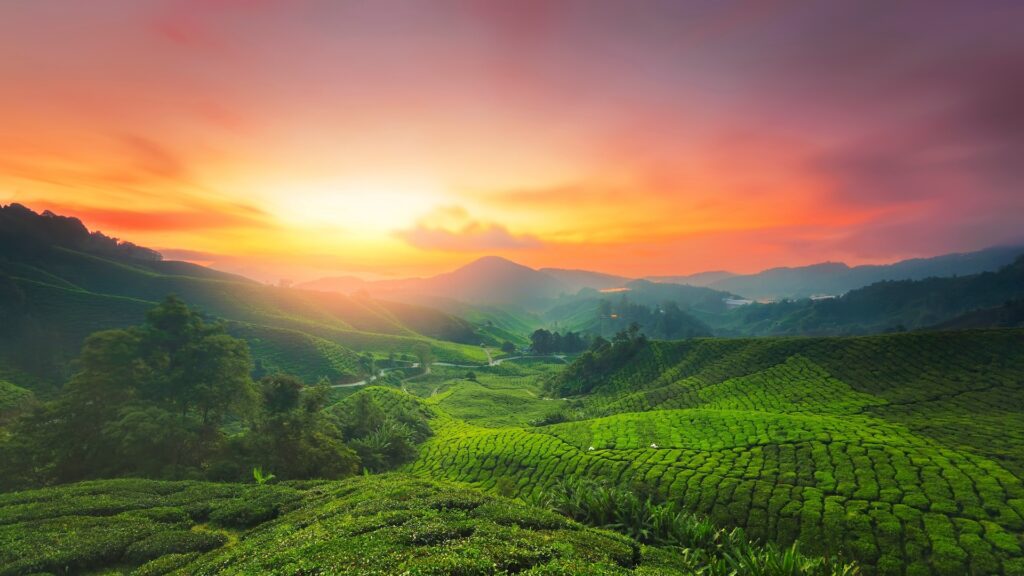
Sunrise of tea plantation in Cameron Highland, Malaysia.

Cameron Highlands
It’s worth the arduous drive north into the rolling hills and verdant forests of the Cameron Highlands. These hills are home to tea plantations, strawberry farms, roadside stands of fresh local fruits and vegetables. I enjoyed a morning break of a huge ear of roasted sweet corn – for 35 cents, too large to finish – sold by a woman with a gleaming smile. Enjoy rushing waterfalls, colorful flowers, and perhaps glimpse some of the 700 different species of birds.

For cultural insights, walk through an authentic Orang Asli Village. The indigenous inhabitants are historically linked with the people of Myanmar and Thailand. Plan ahead to leave a small tip, perhaps a candy bar or packaged snack, to these shy but respectful people who allow visitors into their simple life.

Continuing up into the Cameron Highlands, enjoy the beautiful fresh, cool climate, jungle views, parrots, and quick refreshing rain showers. Hotels offer authentic dinners and lavish breakfasts – a MUST when visiting Malaysia. Descend via Kuala Kangsar and Penang, stopping to tour a working tea plantation, sample fresh strawberries, and visit a Butterfly Park.

Kuala Kangsar & Penang
Travel north to the picturesque royal capital of Kuala Kangsar, once occupied by the British in Malaysia, where colonial construction dots the city center. Visit the magnificent Ubudiah Mosque with its marble exterior and golden domes, then view the luxurious Palace of the Sultan of Perak. Cross the Penang Bridge, one of the longest in Asia, to the island of Penang.

Explore Penang, the oldest British settlement in Malaysia, a colorful cross-section of Malay, Chinese, Thai, Indian, and European influences. In George Town, a UNESCO World Heritage Site, visit Fort Cornwallis, St. George’s Church, the Kuan Yin Temple, a Hindu Temple, and the Kapitan Keling Mosque. Wander into lively Little India and see the ornate Khoo Kongsi Clan House, designed to capture the splendor of a Chinese Imperial Palace.

Conclusion
These are just a few highlights of my 12-day visit. So unique, unspoiled, and refreshing. Beautiful traditions and people!
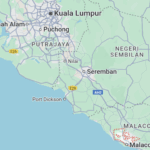
Optional Tours

Monday, April 27 Tours

There are 2 optional tours to choose between on Monday: at 12:30, Choose the City Tour which includes lunch at the Autism Café and a bus tour of Kuala Lumpur, or the Cyberjaya Tour which includes visiting Multimedia University, Cyberview (a city planning corporation), and Malaysia Digital Economy Corporation (MDEC).

Thursday, April 30 Tours

Choose between 2 tour options: An all day tour of Melaka, a city founded by the Portuguese, and visit the SOCSO Rehabilitation Centre to see how workers with special needs are trained in Malaysia.  Or take the Industry Tour and visit two corporations: Grab and Air Asia

Kuala Lumpur City Tour: Monday, April 27

Time Activity
12:30 PM Depart Urban Living (Petaling Jaya)
1:15 PM Arrival at Autism Café Project (ACP), Shah Alam
– Welcome by Mr. Mohd Adli Yahya, Founder
– Introduction: Empowering Youths with Autism through Entrepreneurship
– Inclusive lunch experience
– Interaction with café youth team and volunteers
– Group photo & optional souvenir purchase
2:45 PM Travel to Kuala Lumpur City Centre (storytelling en route)
3:30 PM KLCC Esplanade & Petronas Twin Towers / Suria KLCC
– Photo session & leisure time
– Optional coffee break
4:30 PM Heritage & Cultural Discovery
– Merdeka Square & Sultan Abdul Samad Building walking tour
– Explore River of Life & colonial architecture highlights
– Optional visit to National Mosque
5:45 PM Depart for Urban Living
6:15 PM Arrive Urban Living

First visit the Autism Café Project where Mr. Mohd Adli Yahya, Founder, will explain how the Autism Café works with autistic people to provide good food and a great work environment.  Enjoy a delicious lunch there, then visit the center of Kuala Lumpur.  The Petronas Twin Towers is one of the most distinctive sights, but the river is lined with many architecturally unique buildings, and the National Mosque is nearby.

Cyberjaya Tour: Monday, April 27

Time Activity
12:30 PM Depart Urban Living (Petaling Jaya)
1:15 PM Lunch at local café in Cyberjaya
2:15 PM Arrival at Multimedia University (MMU)
– Welcome briefing
– Campus tour
– Sharing session on education, innovation, and talent development
3:45 PM Visit Cyberview Sdn Bhd (city planning)
– Presentation on Cyberjaya as Malaysia’s Global Tech Hub
– Discussion on smart city development and industry collaboration
4:30 PM Visit MDEC – Malaysia Digital Economy Corporation
– Briefing on digital economy initiatives, AI, and talent programs
– Networking session with MDEC representatives
5:30 PM Depart Cyberjaya
6:15 PM Arrive Urban Living (Petaling Jaya)

Visit Cyberjaya, Malaysia’s Silicon Valley. Cyberjaya is a city designed to inspire innovative technology, about 34 kilometers south of Universiti Malaya.

While there, you will visit Multimedia University, dedicated to creating the future of communication, which lies at the intersection of research and

Then you will visit Cyberview, a corporation that began as a landowner and is now a Tech Hub Developer.  Cyberview has evolved to become a key player in developing a tech ecosystem for creators and innovators.

Finally, visit Malaysia Digital Economy Corporation (MDEC), a government agency under the purview of the Ministry of Digital, which was established in 1996 to lead Malaysia’s digital economy.

Melaka Tour, Thursday, April 30

By Dr. Poh Li Lau

TimeActivity
7:50 AMDepart Urban Living (Petaling Jaya)
10:00 AMArrive SOCSO Rehabilitation Centre, Melaka
12:30 PMLunch – Peranakan Cuisine
2:00 PMVisit Melaka Straits Mosque, A’Famosa Fort, St. Paul’s Church, Dutch Square
4:00 PMMelaka River Cruise
6:00 PMJonker Street Night Market
8:00 PMDepart for Urban Living
10:00 PMArrive Urban Living

Malacca (Malay: Melaka), a UNESCO World Heritage Site, is the name of both a state and a city in Malaysia, located in the southern region of the Malay Peninsula, facing the Strait of Malacca. Today, Melaka is a popular tourist destination, especially for those interested in history, culture, and food. It is filled with colonial buildings, ancient churches, museums, temples, and traditional shophouses.
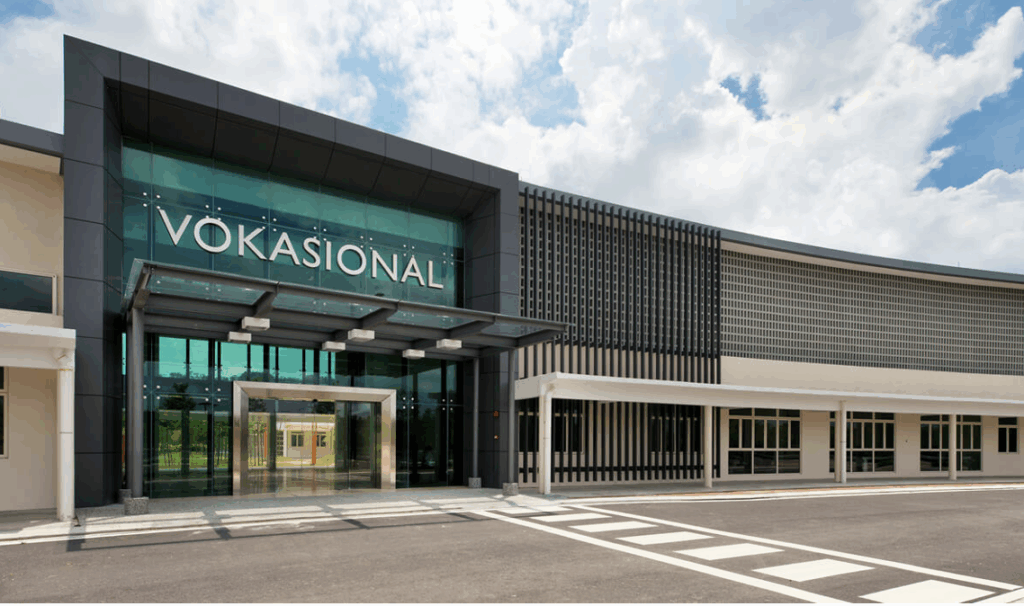
SOCSO Rehabilitation Centre provides Vocational Rehabilitation to ensure clients are equipped with necessary skills to live independently and return to work. Each skill training module is comprehensive and suitable for clients who are receiving treatments due to industrial injury or suffering from related illness. With these comprehensive modules, our centre is equipped to cultivate quality trainees on par with ordinary trainees! We will tour this center.  (https://www.rehabmalaysia.com/en/vocational)

After touring the SOCSO Rehabilitation Centre, we will enjoy the sites of the old city. One of the most famous areas is Jonker Street, known for its weekend night market, street food, and antique shops. Tourists also enjoy visiting places like A Famosa, Stadthuys, St. Paul’s Hill, and Baba and Nyonya Heritage Museum. Melaka is also famous for its unique Peranakan (Baba Nyonya) culture, which blends Chinese and Malay traditions. This can be seen in its food, fashion, and architecture. Local dishes like Nyonya laksa, chicken rice balls, and cendol are must-tries.

Dutch Square (Red Square) Melaka

The famous place in Melaka is Holland Square. Most of the buildings in the Netherlands are mainly red, so the whole area of the square is mostly red and orange-red buildings. Among them, the famous Red House, which is said to be built in 1650, is the oldest existing Dutch building in the Far East. In the early days, it was a Dutch residence and office, and now it has been changed to the Malacca Museum.  The most picturesque points of Malacca and the most prominent buildings of Dutch Square are Stadthuys and Christ Church.
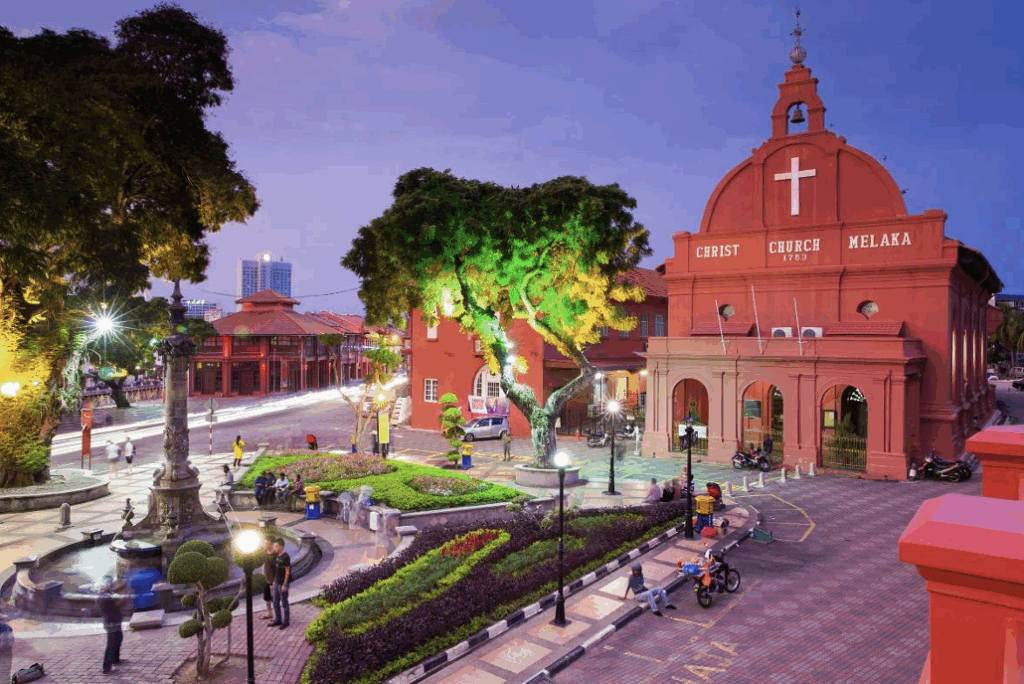
Jonker Street Night Market

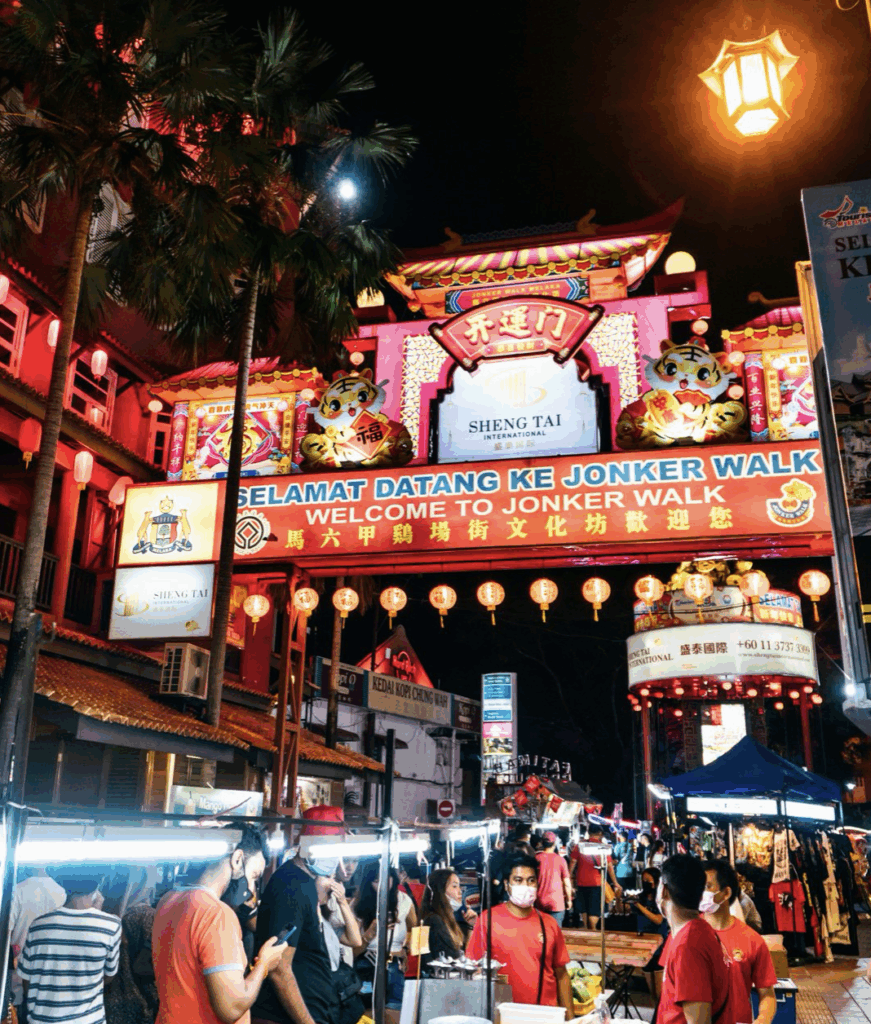
The Jonker Street Night Market typically kicks off around 6 PM and runs until late into the night, making it the perfect spot for an evening outing. The best time to visit Jonker Street is on the weekend, especially Friday and Saturday nights, when the market is in full swing, and the atmosphere is electric. Jonker Street Night Market is a leisurely shopping and culinary experience, offering nearly 500 stalls for food, drinks, local handicraft items, packaged snacks, herbs, spices, tea, coffee, jewellery, clothes, accessories, shoes, and chocolates.
Baba & Nyonya Heritage Museum

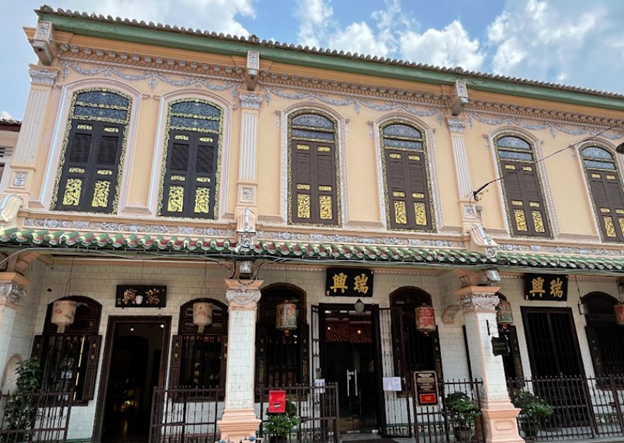
The Baba & Nyonya Heritage Museum is located in Melaka, a world UNESCO Site. The house is a combination of three terrace lots that were acquired by the Chan family in 1861. Four generations lived in the house before it was opened as a museum in March 1985. The museum showcases the local history of descendants of ethnic Chinese-Malays called Baba-Nyonya or Peranakan in the state. Visiting hours from 10.00am to 4.30pm every day.
https://www.babanyonyamuseum.com/
Melaka Straits Mosque
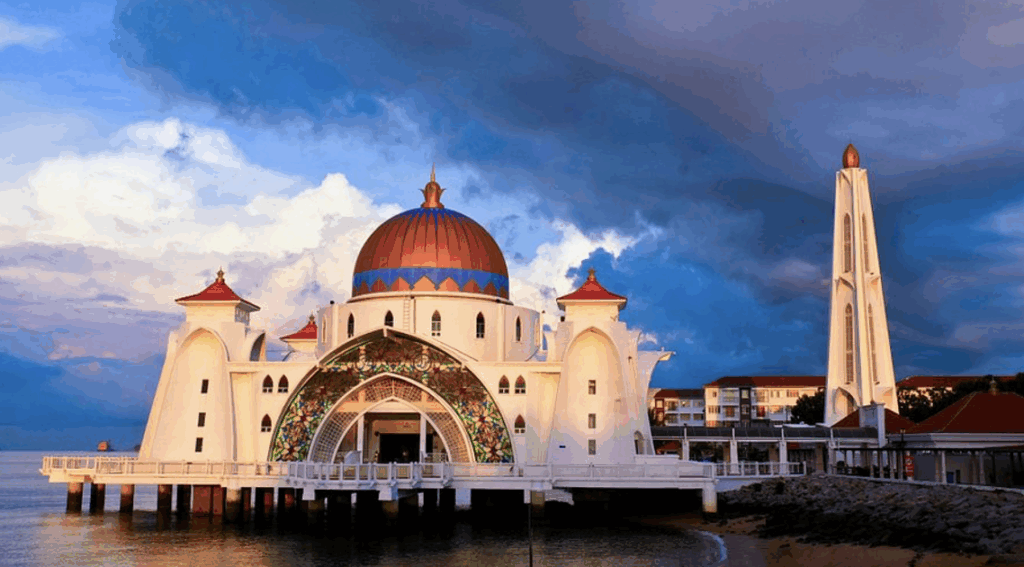
Opened in 2006, this iconic mosque is renowned for its unique design that creates the illusion of floating on water during high tide, offering a serene and picturesque setting for visitors. With its golden dome and breathtaking views of the Strait of Melaka, the mosque presents a unique blend of modern Islamic architecture and traditional Malay craftsmanship.
A’Famosa Fort
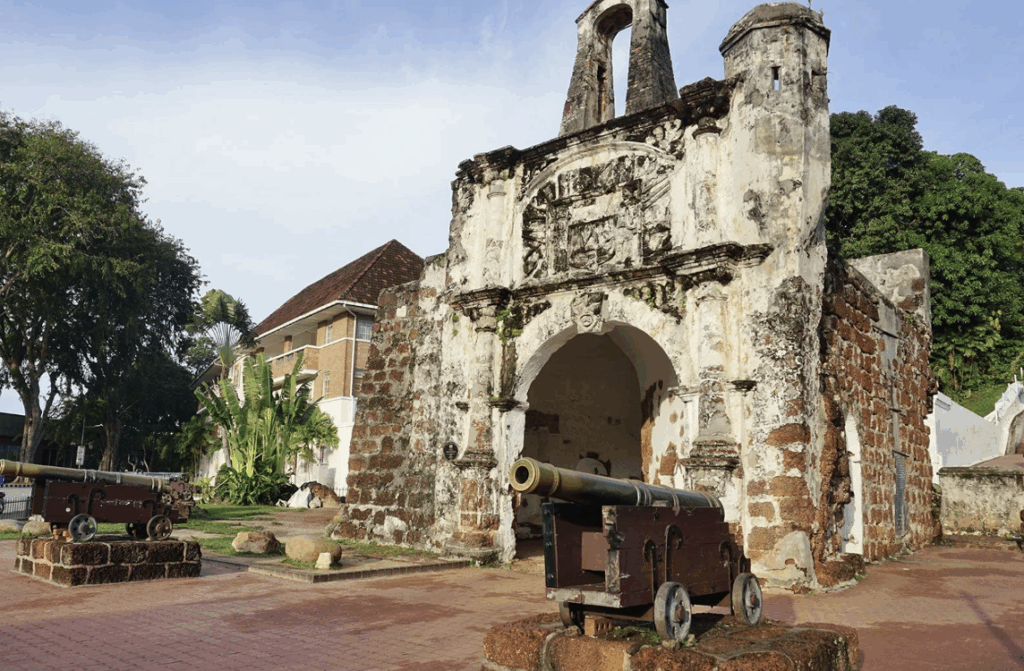
A Famosa, which means ‘The Famous’ in Portuguese, is one of the oldest surviving European architecture in Asia. The only remnant that history has spared of this once mighty fortress is the tiny gate called the Porta de Santiago.
Muzium Samudera (Flor de La Mar)
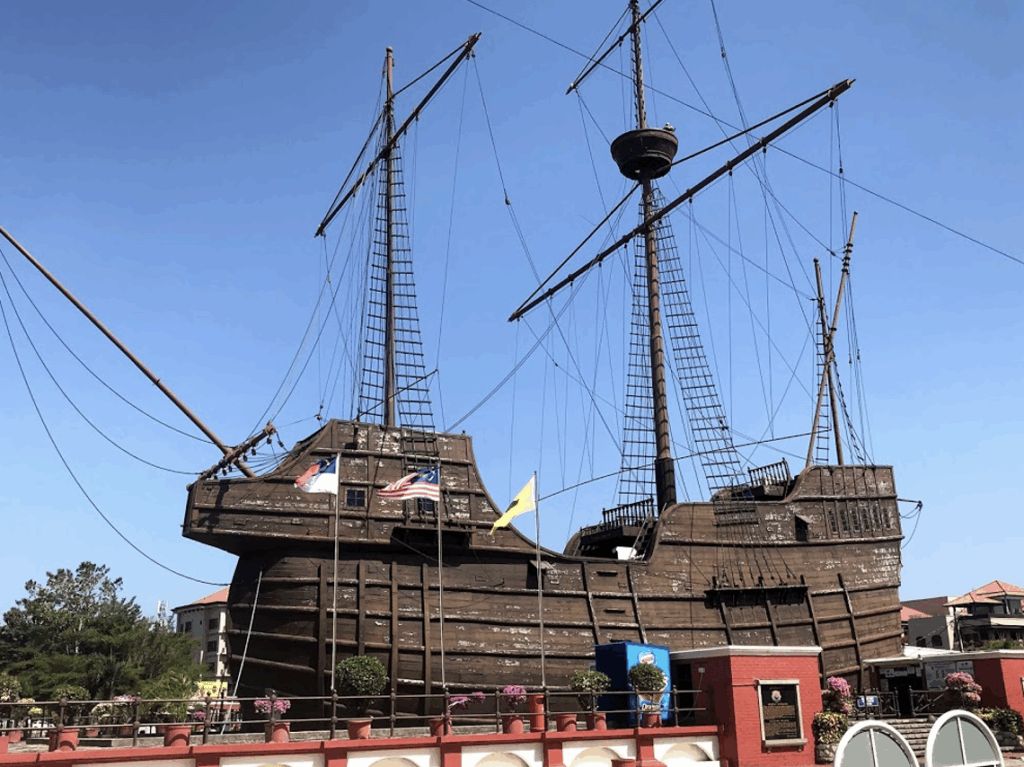
The Maritime Museum in Malacca is a renowned attraction located along the Malacca River, inside a striking replica of the Portuguese ship Flor de la Mar, which sank near Malacca in the 16th century. This impressive museum offers visitors a glimpse into the city’s rich maritime past, showcasing its pivotal role in the spice trade and its connections to various cultures and nations. Inside, exhibits include ship models, old maps, and artifacts that highlight how Malacca flourished as a major trading port, linking East and West.
St Paul’s Church
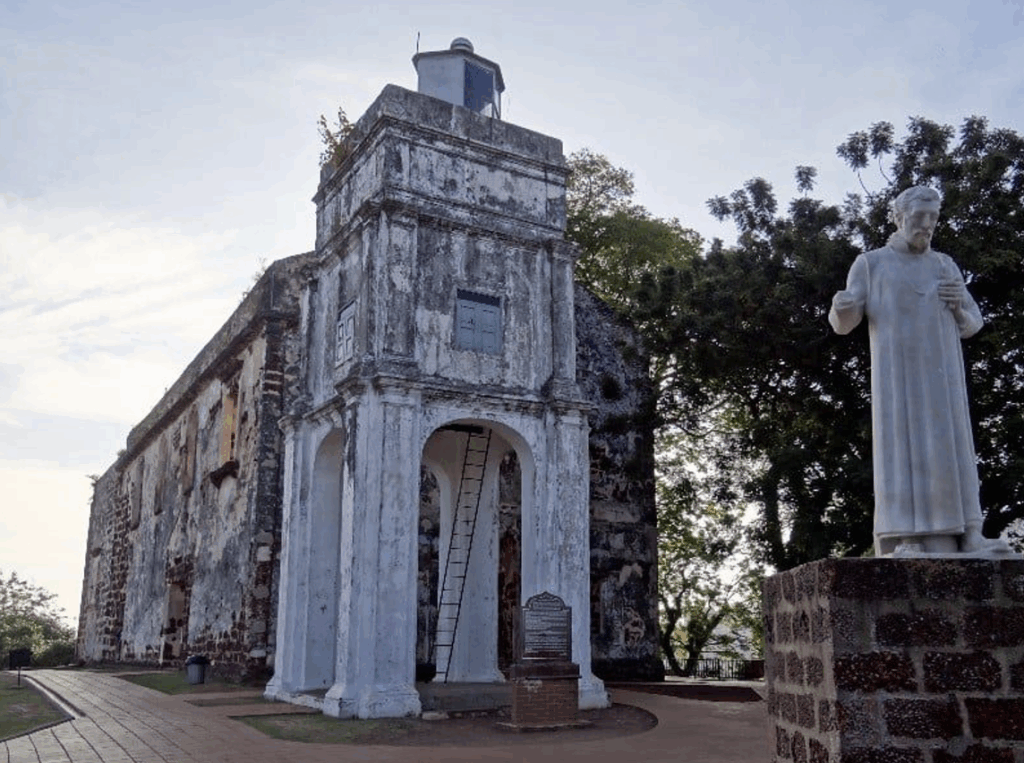
Situated atop the historical St. Paul’s Hill, St. Paul’s Church is not only the oldest church building in Malaysia but also a revered landmark in Southeast Asia. Established in 1521, the church is a timeless testament to Melaka’s diverse cultural heritage and stands today as part of the Melaka Museum Complex.
Melaka River Cruise
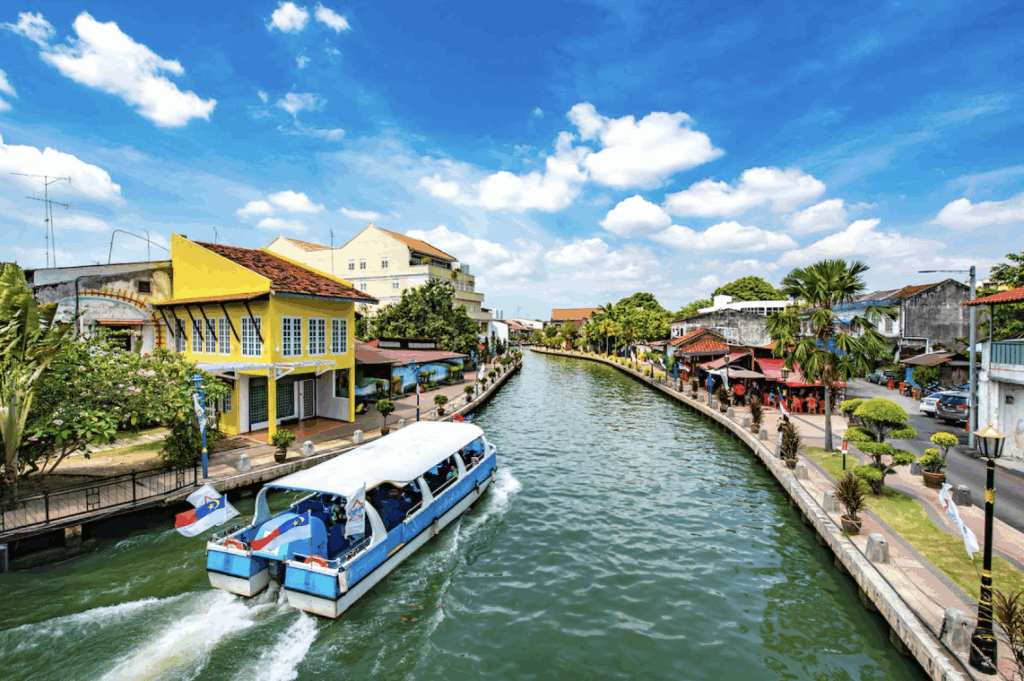
Enjoy a relaxing 45-minute Melaka river cruise along Sungai Melaka and witness the city’s vibrant heritage. Explore Melaka’s rich history and contemporary wonders as you journey past some of Melaka’s most stunning landmarks. The Melaka River Cruise operates daily from 9:00 AM to 11:00 PM, welcoming you on board with the option to either bask in the town’s daylight beauty on its day cruises or enjoy the serene views that Melaka has to offer by night.
Industry Tour: Thursday, April 30

Time Activity
9:30 AM Depart Urban Living (Petaling Jaya)
10:00 AM Arrive Grab Holdings Inc.
12:30 PM Lunch at local restaurant
1:30 PM Depart for AirAsia Headquarters
2:30 PM Visit Red Q, AirAsia Headquarters, Kuala Lumpur International Airport
4:30 PM Depart for Urban Living (or for a flight home)
5:30 PM Arrive Urban Living (Petaling Jaya)
In the morning, visit Grab Holdings Inc. The company was founded as MyTeksi by Anthony Tan and Tan Hooi Ling in 2012 to make taxi rides safer in Malaysia. By 2016, it was rebranded as Grab with an expansion of partnerships in Southeast Asia that coincided with the development of products for couriers.  Eat lunch at a local restaurant. Grab is Southeast Asia’s first decacorn (a privately held startup company with a valuation exceeding $10 billion) and the biggest technology startup in the region.  It became publicly traded on the NASDAQ in 2021, following the largest SPAC merger at the time. In 2023, Fast Company listed Grab amongst the most innovative companies in the Asia-Pacific region.
In the afternoon, visit Air Asia Headquarters, which is called RedQuarters, or just RedQ.  It is located at the Kuala Lumpur International Airport. RedQ is definitely a cool place to work.  At Air Asis, they believe in the Open Plan Office. AirAsia is breaking down the barriers – literally and figuratively. The objective of the open-plan concept is to encourage interaction between departments and cutting down on bureaucracy.   Staff are called Allstars.  Air Asia offers the Allstars Clinic. Getting to a doctor may prove to be a challenge since RedQ is far from the city, so management has set up a clinic at RedQ to ensure the welfare and health of the staff are taken care of. Allstars can join in on a number of fitness activities such as yoga and Zumba to stay fit and healthy. However, for Allstars who wish to take their fitness regime to the next level there’s a fully equipped gym and a sauna room.   If you are flying home after the tour – no need to return to KL. You will already be at the airport.